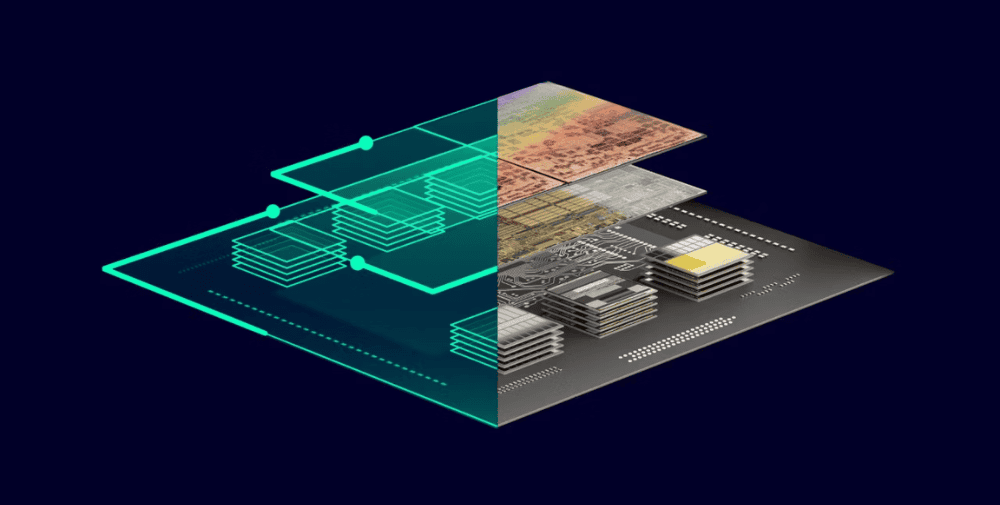
Defacto Technologies’ technology complements Siemens’ existing EDA solutions by extending end-to-end continuity across the entire SoC design lifecycle—from early concept design through downstream implementation, verification, and sign-off. The combined offering supports advanced design workflows and enables the automation of processes in the areas of connectivity, timing constraints, and power intent.
“With Defacto Technologies, we are strengthening our ability to support customers in automating SoC development and establishing reliable design workflows early in the development cycle,” said Ankur Gupta, Executive Vice President, IC Portfolio, Siemens EDA, Siemens Digital Industries Software. “By extending end-to-end continuity across the entire SoC development lifecycle, we help semiconductor teams manage complexity, increase productivity, and make informed design decisions early on, enabling faster innovation and higher-quality results.”
“Joining Siemens represents an important next step for our company and our customers,” said Chouki Aktouf, Chief Executive Officer at Defacto Technologies. “This new chapter opens up significant opportunities for our customers by combining our deep expertise in SoC design automation with the breadth of Siemens’ EDA portfolio. Together, we aim to help engineering teams simplify complex workflows, increase productivity, and accelerate innovation across the entire semiconductor and electronics industry.”
As semiconductor companies transition from monolithic designs to chiplet-based and highly configurable SoC architectures, the number of IP blocks and interconnections continues to grow rapidly. Manual SoC assembly processes are becoming increasingly time-consuming and error-prone, driving demand for automation as early as the RTL design phase. Defacto Technologies’ technology addresses this challenge by automating SoC assembly, design restructuring, and power intent management using a unified, persistent design database.
Defacto Technologies was founded in 2003, is headquartered in Grenoble, France, and develops software for the automated creation of SoC designs with a focus on register-transfer-level design. The terms of the acquisition were not disclosed. For more information on Siemens’ EDA portfolio and its approach to innovation in semiconductor design, visit https://blogs.sw.siemens.com/digital-design-creation-platform/2026/07/21/siemens-acquires-defacto-technologies-transforming-soc-design-with-powerful-re-use-and-assembly-automation-technology/
Siemens Digital Industries Software supports companies of all sizes in their digital transformation with software, hardware, and services from the Siemens Xcelerator Business Platform. Siemens software and the comprehensive digital twin enable companies to optimize their design, engineering, and manufacturing processes to turn today’s ideas into sustainable products of the future—from the chip to the complete system, from the product to the process, across all industries. Siemens Digital Industries Software—Accelerating transformation.
Siemens Digital Industries (DI) helps companies of all sizes in the process and discrete manufacturing industries accelerate their digital and sustainable transformation across the entire value chain. Siemens’ state-of-the-art automation and software portfolio is revolutionizing the design, implementation, and optimization of products and production. And with Siemens Xcelerator—the open digital business platform—this process becomes even simpler, faster, and more scalable. Together with our partners and the ecosystem, Siemens Digital Industries enables customers to become sustainable digital enterprises. Siemens Digital Industries employs approximately 70,000 people worldwide.
Siemens AG (Berlin and Munich) is a leading technology company focused on the fields of industry, infrastructure, mobility, and healthcare. The company’s mission is to develop technology that improves everyday life for everyone. By connecting the physical and digital worlds, it enables customers to accelerate their digital and sustainable transformation. This makes factories more efficient, cities more livable, and transportation more sustainable. As a leader in industrial artificial intelligence, Siemens leverages its extensive expertise to apply AI—including generative AI—to real-world applications and develops AI solutions for customers across all industries that deliver real added value. Siemens is the majority owner of the publicly traded company Siemens Healthineers, a global leader in medical technology that is pioneering advancements in healthcare. For everyone. Everywhere. Sustainably.
In fiscal year 2025, which ended on September 30, 2025, the Siemens Group generated revenue of 78.9 billion euros and net income of 10.4 billion euros. As of September 30, 2025, the company employed approximately 318,000 people worldwide on a continuing operations basis.
– – – – –
Related Links
👉 www.siemens.com
Photo: Siemens