As robots and autonomous machines increasingly leave shielded industrial environments and operate in factories, logistics centers and public spaces, not only are security requirements increasing, but so are the economic risks. A cyber attack can result in business interruptions and liability claims that go far beyond classic data loss. For manufacturers and operators of robot systems, the choice of security architecture is therefore not a purely technical decision. It affects long-term competitiveness, approvability in regulated markets and total cost of ownership over the full product lifecycle.
“Robots that perceive, analyze and respond to the real world are only as trustworthy as the security foundation on which they are built,” says Dr. Stephan Zizala, Division President Connected Secure Systems at Infineon. “Infineon’s OPTIGA TPM anchors a hardware-based trust foundation in the NVIDIA Jetson Thor platform, which has already been proven in hundreds of millions of devices worldwide. This integration meets the specific requirements of industrial robotics: long lifecycles, real-time capability and reliable operation on a large scale. The integrated post-quantum cryptography ensures that this foundation is not only hardened against current threats, but provides protection over the lifetime of each robot.”
“Physical AI systems operate in the real world, where security is a fundamental requirement,” said Deepu Talla, Vice President Robotics and Edge AI at NVIDIA. “Infineon’s certified OPTIGA TPM for NVIDIA Jetson Thor helps developers protect cryptographic keys, verify software integrity and deploy robot fleets securely at scale. This creates a hardware-based foundation of trust – the basis for secure and resilient autonomous systems.”
The EU Cyber Resilience Act, the EU AI Act, the IEC 62443 standard for industrial systems and industry-specific standards in healthcare and the automotive industry are leading to new requirements for verifiable and auditable security at hardware level. This creates a demand driven by regulatory and compliance requirements that Infineon and NVIDIA can specifically address.
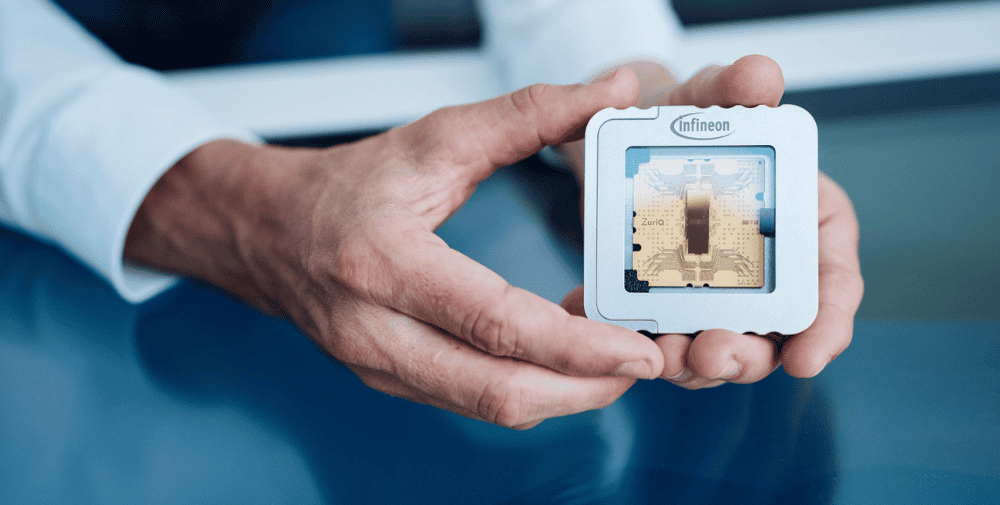
The OPTIGA TPM technology provides a physically isolated, FIPS and Common Criteria certified solution that is separate from the application processor. It enables measured boot and remote attestation, allowing operators and regulators to cryptographically verify that the software stack is authentic and unaltered at any point in a system’s operation. It also provides hardware-protected storage for proprietary AI model keys, encrypted communications and cryptographically signed over-the-air updates.
The OPTIGA TPM, the industry’s first TPM with a post-quantum secured firmware update mechanism, is designed as a Root of Trust that is uncompromisable even in the face of evolving cryptographic threats. Developers building Physical AI applications on NVIDIA’s Jetson Thor platform can rely on the hardware-based security foundation already embedded in the architecture phase and remain protected against current and future cryptographic threats in robotic systems.
The roadmap to full post-quantum security is rounded out by Infineon’s next-generation OPTIGA TPM. The TPM integrates algorithms such as ML-KEM and ML-DSA, which were standardized by the US National Institute of Standards and Technology (NIST) in 2024. Companies that build on the current OPTIGA TPM today will be able to make a smooth transition in the future. For the robotics industry, this is important beyond technical readiness. The regulatory framework for Physical AI is already moving towards mandatory PQC compliance. The architectural decision made at the outset therefore determines whether a deployed robot fleet can meet these requirements over its entire service life or will be faced with costly hardware interventions when the relevant regulations come into force.
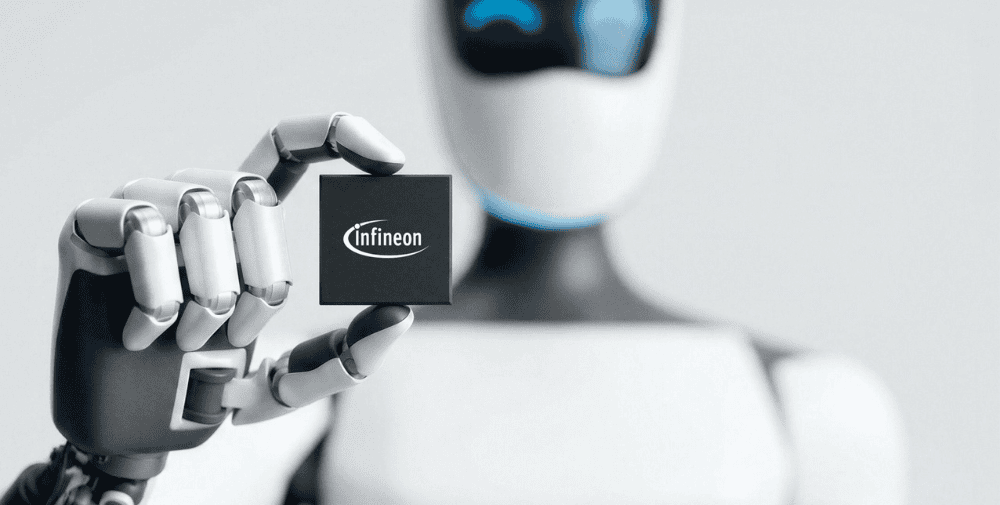
Humanoid robots rely on a chain of semiconductor functions to perceive, think and act safely and reliably – from sensors, actuators and energy management to connectivity and safety. Infineon addresses all these functional areas with a broad portfolio of specialized solutions, with an estimated semiconductor content per humanoid robot of around 500 US dollars. Safety is not an optional feature, but the foundation of modern robotics. Infineon is building the shield against tomorrow’s threats. Security components, including TPMs, are taking up an ever larger share of this inventory as regulatory requirements become increasingly important. Working with ecosystem partners such as NVIDIA, Infineon is helping robot developers and manufacturers transition from lab applications to fleet deployment in industrial, healthcare and logistics environments.
Availability
A reference design for the OPTIGA TPM SLB 9672 is available. Further information is available at www.Infineon.com/OPTIGA-TPM-SLB9672, www.infineon.com/pqc and www.infineon.com/cra
About Infineon
Infineon Technologies AG is a leading global provider of semiconductor solutions for power systems and the Internet of Things (IoT). With its products and solutions, Infineon is driving decarbonization and digitalization. The company has around 57,000 employees worldwide (end of September 2025) and generated sales of around 14.7 billion euros in the 2025 financial year (end of September).
– – – – –
Further links
👉 www.infineon.com
Photo: KI / Infineon