Humanoid robots dance on stage, billions in capital are pouring in, and the debate swings between utopia and skepticism. What often gets overlooked: The actual transformation surrounding AI-based robotics is taking place behind the scenes and by no means affects only systems with a human-like design. It is shaped by the interplay of software, data, simulations, and hardware components, with the goal of enabling companies to deploy intelligent systems economically and safely.
The Fraunhofer Institute for Manufacturing Engineering and Automation IPA presents a comprehensive analysis in its study “Artificial Intelligence Meets Robotics: Physical AI, Humanoid Robots, and the Future of Automation.” It analyzes the convergence of artificial intelligence and robotics—physical or embodied AI—from technological, market, and investment perspectives.
An Overview Is Necessary
Demographics, a shortage of skilled workers, wage pressure, reshoring, and sustainability requirements are creating a structural need for automation, primarily in manufacturing and logistics, but also in entirely different sectors such as healthcare and services. At the same time, AI methods that make robots more adaptive are maturing, and the combination of high available computing power along with efficient hardware and software provides the potential for disruption.
“Many decision-makers currently see humanoids primarily in shows or demonstrations at trade fairs and rightly ask: What is actually ready for deployment?” says Dr. Werner Kraus, head of the Automation and Robotics Research Division at Fraunhofer IPA. “Our study separates hype from reality and shows where added value is already being created today. With humanoids in particular, much of the focus is still on piloting, benchmarking, and identifying clear application scenarios that are technically and economically feasible.”
Embodied AI Is Bigger Than Humanoids
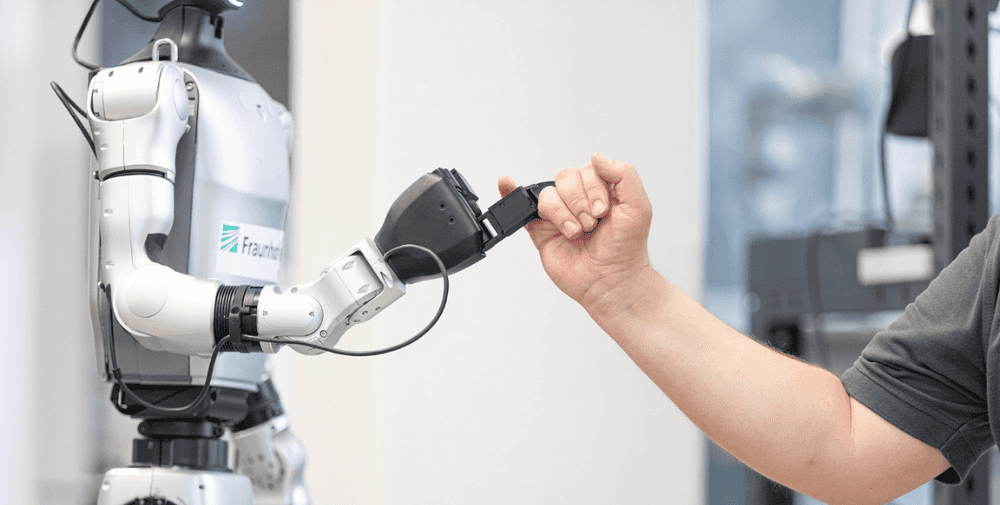
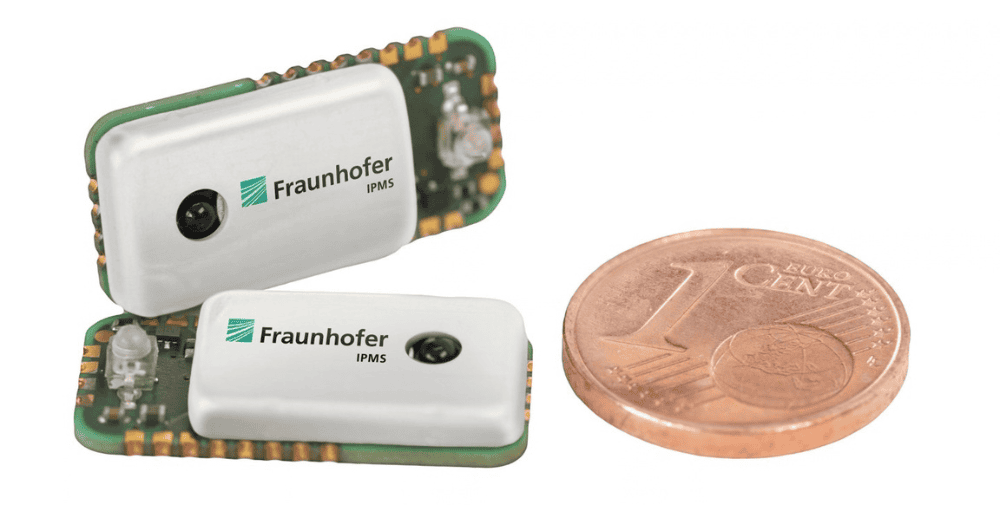
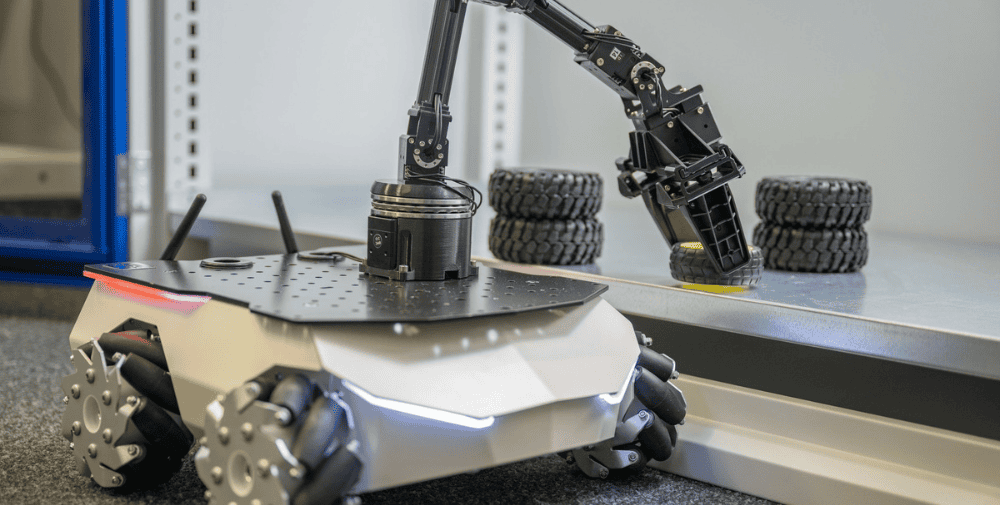
The study’s key finding: AI-based robotics is not synonymous with humanoid robots. AI can be integrated into industrial robots, mobile systems, cobots, and service robots to make them more autonomous and capable of learning. While humanoids are the most visible manifestation, they are still only one part of the ecosystem. The real disruption is taking place deep within the value chain: in foundation models, sensor technology, and actuators; in simulation and data platforms; and among integrators who incorporate the technology into processes.
Nevertheless, the extensive investments in humanoids are proof that developments in this segment are advancing rapidly. Venture capital investment in this area jumped to around 6.1 billion U.S. dollars in 2025—four times the amount invested the previous year.
Humanoids: Complementary Use Rather Than Short-Term Replacement
“It is unlikely that humanoids will replace existing robotic solutions in the short term,” explains Simon Schmidt, head of the Automated Systems Division at Fraunhofer IPA. “Industrial robots, cobots, and autonomous mobile robots remain superior in terms of productivity and cost in many applications. It is more likely that humanoids will complement tasks that have been difficult to automate to date due to flexibility requirements or human-centered workplace design.” Demonstrations should therefore not be confused with mass adoption. Success depends on diffusion, safety, regulations, and integration.
A particular bottleneck for broader deployment is the dataset that enables intelligent robots to learn specific tasks on their own in the context of powerful AI models (foundation models, vision-language-action models, etc.). Generating this critical data is therefore currently a key focus in the development of AI-based robotics.
What Decision-Makers Can Take Away From This
AI-based robotics is already market-ready in certain applications today. If companies are interested in these technologies, they should first identify specific “pain points” for greater automation. The next step is to find suitable, mature solutions, pilot them first, and only then scale them up.
Investors should differentiate along the value chain: Direct investments in individual humanoid robot manufacturers are risky because the market is still highly dynamic. Providers of key components, AI infrastructure, simulation, and data ecosystems can participate earlier and more broadly. Specifically regarding humanoid robots, the “Humanoid Capabilities Navigator” and a modular benchmark from Fraunhofer IPA support the objective assessment of industrial suitability—from potential analysis to integration into, for example, manufacturing and intralogistics.
The study “Artificial Intelligence Meets Robotics: Physical AI, Humanoid Robots, and the Future of Automation” is available here in an abridged version.
– – – – –
Further Links
👉 www.ipa.fraunhofer.de
Photo: Fraunhofer IPA/Photo: Rainer Bez