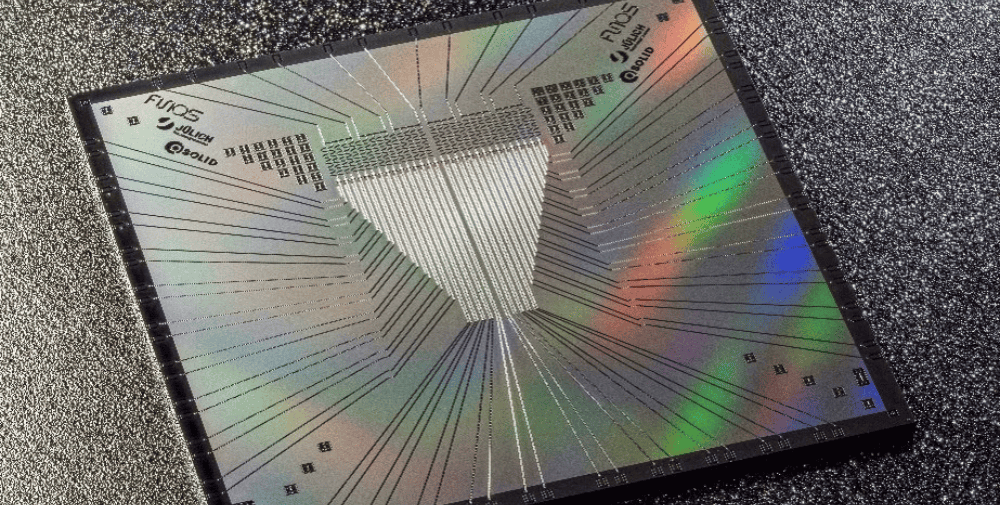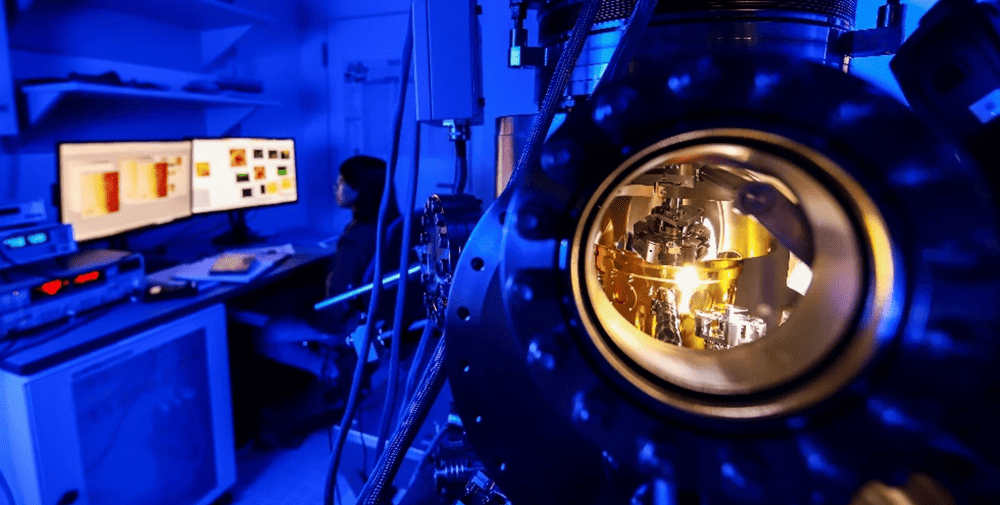
The JSC is home to Europe’s first exascale supercomputer and is a leader in the field of AI with the JUPITER AI Factory—one of 19 AI factories in Europe and the only one built around an exascale machine. The new Sparxity system at the JSC is event-driven and only performs computations when something happens—a form of sparsity in practice. The system installed at the JSC, called JUBIS, is designed to accelerate the execution of sparse solvers by a factor of 10, reduce energy consumption for event-driven ML workloads by a factor of 18, and shorten the time to an acceptable solution for optimization problems by a factor of 20. The system is set to become available for broader HPC and AI applications, and its installation at the JSC is further evidence that “sparse-native” data processing works in real-world infrastructure.
“Sparse machine learning represents one of the greatest opportunities to fundamentally improve the efficiency of AI,” said Dr. Guido Trensch of the Simulation and Data Lab Neuroscience at the Jülich Supercomputing Centre. “By using Sparxity, we can supplement our globally unique HPC infrastructure with a fundamentally new approach and thereby open up new research opportunities to further advance progress in the neurosciences.”
Since AI infrastructure faces challenges related to energy consumption and costs, sparsity represents one of the greatest untapped avenues for AI infrastructure. Research has shown that AI models could be sparser than they are today, but hardware designed for dense computations has prevented this so far. “Sparse computing” takes the approach of reducing computational effort and the amount of data to be transmitted in order to alleviate bottlenecks.
“Model developers have spent years adapting their designs to the limitations of dense hardware,” said Hector Gonzalez, co-founder and CEO of Sparxity. “Sparxity was founded to make possible what they would develop without these constraints—by computing only what is truly important. Our rebranding focuses entirely on the ‘sparse-native’ approach as a practical foundation for the next generation of AI infrastructure. Our current systems bring Sparxity to both the HPC and AI domains, and our collaboration with the Jülich Supercomputing Center, one of the largest supercomputing facilities in Europe, demonstrates the value of this approach at the supercomputer scale.”
Based on this principle, Sparxity develops full-stack systems—from silicon to software—and does not limit itself to a single chip. The current systems serve both HPC and AI, and the next generation will rely entirely on sparsity for AI inference. For model developers, this means freedom from the limitations of dense hardware and access to finer, more dynamic sparsity. For AI inference operators, such as data centers and neoclouds, sparsity means more tokens at higher speeds and lower costs, without compromise.
To learn more about Sparxity and its “sparse-native” computing systems, please visit sparxity.ai.
The Sparxity system at JSC is funded by the European Regional Development Fund (ERDF) and the state of North Rhine-Westphalia (NRW) as part of the “ERDF/JTF Program NRW 2021–2027.”
About Sparxity
Sparxity develops “sparse-native” computing solutions for AI. Our principle is simple: Compute only what matters. For years, models have been shaped by the “dense” hardware on which they run. Sparxity develops hardware that opens up new possibilities for them: full-stack systems—from custom chips to software—designed for fine-grained, dynamic sparsity, where intelligence can be scaled without compromising speed or efficiency. Sparxity is deployed in rack- and supercomputer-scale systems throughout Europe and the U.S., opening up a new world of computing power for the developers shaping the future. Learn more at sparxity.ai.
– – – – –
Related Links
👉 www.sparxity.ai
Photo: Sparxity