Characterization, testing, and reliability play a crucial role in the value chain of microelectronic components, circuits, sensors, and actuators, as well as in the development of new technologies and components for quantum computing. In Europe, there is a significant need to catch up—not only in assembly and packaging but also, in particular, in testing. Currently, Europe accounts for only about 3 percent of global capacity in assembly, testing, and packaging.
To strengthen European autonomy in this area as well, initiatives and pilot projects such as APECS were launched under the EU Chips Act. APECS stands for Advanced Packaging and Heterogeneous Integration for Electronic Components and Systems. The goal of the initiative is to create a Europe-wide infrastructure that provides companies (specifically SMEs and startups) and research institutions with access to design, manufacturing, integration, and testing capacities for chiplets and heterogeneous systems, in order to accelerate the transition of innovations from research to industrial application. In Chemnitz, the “European Test and Reliability Center” (ETRC) serves as a center of excellence that is unique in Europe.
As part of the Chemnitz seminar “Testing and Reliability Between Ice and Fire: New Laboratories and Methods from 4 K to 700 K,” the opening of the new “Cryo-Lab for Material and Electronics Packaging Chemnitz – CRMYE” was celebrated on September 2, 2026, by Chemnitz University of Technology and Fraunhofer ENAS together with guests from politics, science, and industry. The CRYME provides an optimal infrastructure for researching and developing materials, components, and systems for future generations of quantum computers, as well as for analyzing and evaluating their reliability.
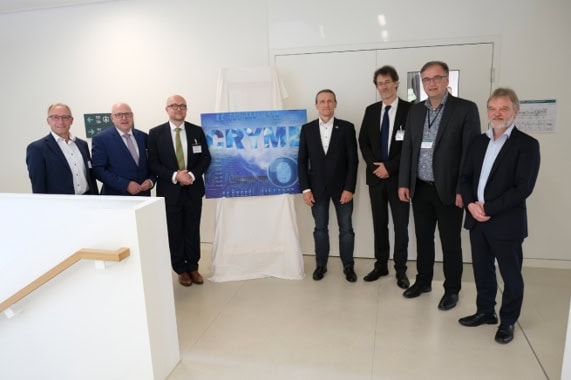
Pictured (from left to right): Prof. Dr. Harald Kuhn, Institute Director at Fraunhofer ENAS and Director of the Center for Micro- and Nanotechnologies (ZfM) at Chemnitz University of Technology, Sven Schulze, Mayor of the City of Chemnitz, Robert Denk, Head of the Higher Education Division at the Saxon State Ministry of Science[MV1.1], Culture, and Tourism; Prof. Dr. Thomas von Unwerth, Vice Rector for Technology Transfer and Continuing Education at Chemnitz University of Technology, Prof. Dr. Bernhard Wunderle, holder of the Chair of Materials and Reliability of Microtechnical Systems at Chemnitz University of Technology, Prof. Dr. Oliver Schmidt, Director of the Research Center for Materials, Architectures, and Integration of Nanomembranes (MAIN) at Chemnitz University of Technology, and Prof. Dr. Sven Rzepka, Head of the “Micro Materials Center” at Fraunhofer ENAS. Photo: Fraunhofer ENAS
Thanks to an investment project by Fraunhofer ENAS, funded by the Federal Ministry of Research, Technology, and Aerospace (BMFTR), state-of-the-art equipment was acquired, including two specialized cooling devices—so-called cryostats—a cryogenic materials testing system for determining thermomechanical properties, and a cryogenic scanning electron microscope for material analysis at extremely low temperatures.
Thanks to these cryogenic testing methods, microelectronic components and system solutions, as well as new materials, can be comprehensively tested and evaluated in the future under conditions of extremely low temperatures down to 4 K (-269 °C). For example, this will make it possible to characterize electrical and photonic system functions, determine the mechanical properties of materials and composites, and investigate and predict their thermomechanical behavior.

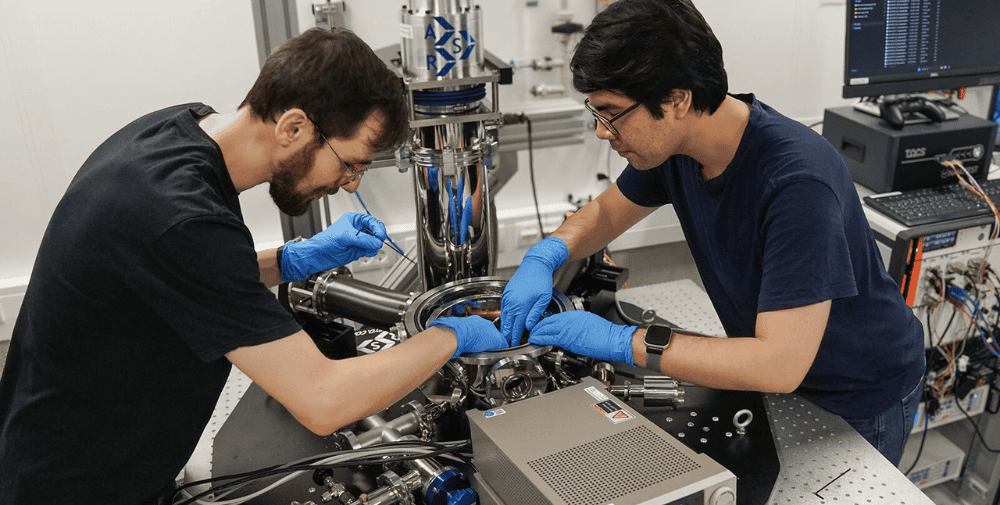
Setup for measuring thermal conductivity at cryogenic temperatures. Photo: Chair of Materials and Reliability of Microtechnical Systems, Chemnitz University of Technology
The second day of the Chemnitz seminar was organized in collaboration with the “Test, Analysis & Reliability” working group of Silicon Saxony. Speakers from academia and industry addressed a wide range of topics in the fields of characterization, testing, and reliability. As part of this initiative, expert Prof. Daniel Kriesten is joining the team of working group leaders in the Test, Analysis & Reliability working group at Silicon Saxony e. V. This will place a stronger focus on the area of testing.
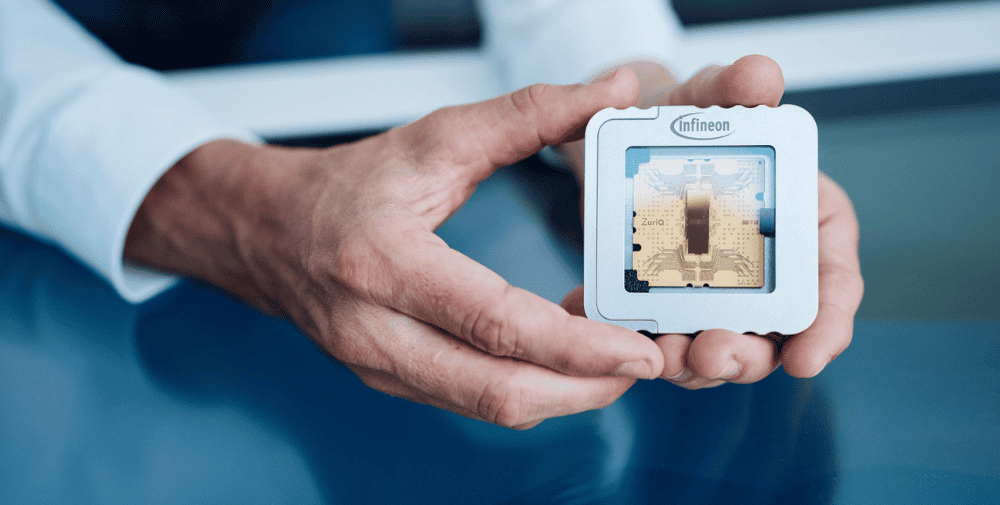
The importance of expanding these tests was also emphasized during the event by industry representatives present in Chemnitz. For example, Infineon Technologies in Austria is working on quantum technologies. Likewise, the German startup eleQtron from Hamburg, which was also present at the event, develops and operates quantum computers.
“Today’s quantum computers require cryogenic operating conditions for their highly complex computational operations. These conditions place the highest demands on the integrated microelectronic components and materials. Therefore, it is essential to test components and materials under realistic conditions to ensure their functionality, robustness, and durability even at ultra-low temperatures. As part of the ETRC, CRYME is now creating the ideal conditions for this in the heart of Chemnitz,” says Prof. Dr. Daniel Kriesten, director of the ETRC.
“As a key technology of the 21st century, quantum computing also stands for technological leadership, high-caliber jobs, and cutting-edge research. That is why the Chemnitz researchers involved in CRYME view the new laboratory as an essential building block for innovation, new large-scale research projects, excellent teaching, and attracting young scientists,” explains Prof. Dr. Bernhard Wunderle, holder of the Chair of Materials and Reliability of Microtechnical Systems at Chemnitz University of Technology. At the same time, the collaboration taking place here is a prime example of successful cooperation at the “Smart Systems Campus” in Chemnitz—an innovative network in the fields of micro- and nanotechnology, where science, applied research, and industry work closely together.
Text: Martin Vogel, Silicon Saxony Community Management in the Chemnitz area
– – – – –
Related Links
https://www.tu-chemnitz.de/tu/pressestelle/aktuell/13594
https://www.enas.fraunhofer.de/de/news_events/News/cryme.html
Photo: Photo: Dr. Uwe Zschenderlein