The discussion about Europe’s semiconductor supply security is often reduced to a single question: How many chips are manufactured in Europe? This perspective falls short. The actual dependence begins long before wafer manufacturing and extends far beyond the finished semiconductor. Raw materials (such as rare earths and high-purity metals), high-purity chemicals and gases, wafers, manufacturing equipment, design software, photomasks, packaging, testing capabilities, energy, water, skilled workers, and logistics form a tightly integrated system.
Current developments in the summer of 2026 in particular demonstrate just how vulnerable this system is: from rising energy prices to logistical challenges and water shortages, to export restrictions on key raw materials and geopolitical conflicts. Europe possesses significant technological strengths, for example in lithography, specialized machinery, chemicals, sensor technology, power electronics, and certain industrial semiconductors. At the same time, there are significant dependencies on the U.S., Taiwan, South Korea, Japan, and China. The European strategy must therefore focus less on complete self-sufficiency and more on strategic resilience, diversification, and securing critical nodes.
The semiconductor value chain is a global network
A modern semiconductor is not produced in a single factory. The value chain can be broadly broken down into interconnected aspects:
- chip architecture, design, and EDA software
- critical raw materials
- high-purity silicon and other substrates
- Specialty chemicals
- Electronic process gases
- Manufacturing equipment
- Photomasks and other manufacturing inputs
- Front-end wafer fabrication
- (Advanced) Packaging
- Assembly and testing
- Printed circuit boards and system integration
- Integration into vehicles, machinery, data centers, telecommunications, and other ICT systems
In addition, there are cross-cutting factors such as energy, water, skilled workers, financing, digital infrastructure, cybersecurity, and international logistics.
The policy challenge lies in the fact that this chain—or, in reality, the far more complex interaction among its stakeholders—is only as resilient as its weakest links. For example, a European fab may have sufficient production capacity but still come to a standstill if a specific process gas, a photomask, or a replacement part for a production machine is not available—or not available quickly enough.
The German federal government has now taken this reality into account. The IPCEI “Advanced Semiconductor Technologies,” planned for 2026, explicitly covers the entire value chain—from materials and manufacturing equipment to chip design, semiconductor production, and modern packaging technologies. Thirty-five projects are planned for Germany; the federal government is providing up to 3.8 billion euros for this purpose, and total investment in Germany is expected to be just under 10 billion euros.
Raw Materials: The First Strategic Bottleneck
At the beginning of the chain are materials that may be produced in relatively small quantities but are indispensable for certain semiconductor processes. These include, among others, silicon, gallium, germanium, indium, arsenic, phosphorus, boron, copper, tungsten, cobalt, tantalum, and rare earth elements.
The crucial question here is not merely where a raw material is found. Rather, what matters is where it is mined, refined, and processed to the purity required for semiconductor production.
This is particularly evident in the case of gallium and germanium. China holds a dominant position in several critical raw materials. This creates a dependency that can very quickly turn into an industrial bottleneck due to export controls or political decisions.
For Europe, this means that processing a raw material within Europe does not automatically eliminate dependence if the raw material must still be sourced from a single non-European source.
Europe is therefore seeking to build up recycling capacities in addition to developing new primary sources. A particularly timely example is electronic waste. Reuters reported on August 24, 2026, that Europe effectively recycles less than 20 percent of the electronic waste it generates. At the same time, the critical materials contained in this waste are being lost. The EU aims to meet approximately 25 percent of its demand for critical raw materials from recycling sources by 2030.
As a result, recycling is increasingly becoming a matter of industrial security. Electronic waste is no longer just trash, but a potential European raw material reserve.
Wafers: Europe’s position is more nuanced than often assumed
Single crystals are produced from high-purity silicon, and wafers are made from these crystals. Europe certainly possesses industrial expertise at this stage. However, the supply situation varies depending on the type of wafer and semiconductor.
So-called compound semiconductors such as GaAs, GaN, InP, and SiC are particularly relevant. Among other things, they play an important role in power electronics, high-frequency technology, photonics, and certain applications in telecommunications.
Germany possesses relevant expertise in this area through companies and research institutions, for example in Saxony and other regions. The current IPCEI AST therefore explicitly addresses materials, chemicals, and raw wafers as strategic “enablers” of the semiconductor industry.
The key challenge is to secure European manufacturing not only for end products but also for these upstream specialty materials.
Specialty Chemicals: Tiny Quantities, Maximum Importance
A modern semiconductor fab is characterized to a large extent by the processing of a whole range of elements from the periodic table. Chemicals of extremely high purity are required for cleaning, etching, lithography, doping, deposition, and polishing processes.
These include, among others, hydrogen fluoride (also known as hydrofluoric acid), sulfuric, hydrochloric, and nitric acids, ammonia, solvents, and numerous highly specialized process chemicals.
The difficulty in the event of a supply disruption lies in the fact that one cannot simply turn to just any supplier. To address this, semiconductor companies implement second- and third-source strategies or strive to maintain sufficient inventory levels. This is because materials must be qualified for use in highly sensitive manufacturing processes. Even minor differences in purity or composition can affect process yield.
This creates a unique form of supply chain risk: a small number of suppliers combined with long qualification times and high quality requirements.
Europe has significant strengths, particularly in the area of specialty chemicals. Nevertheless, the supply of individual products is concentrated globally. A fab’s resilience therefore depends not only on the number of its direct suppliers but also on their upstream supply chains.
Process gases: An Invisible Critical Factor
This applies even more strongly to specialty gases. Semiconductor manufacturing requires, among other things, nitrogen, argon, hydrogen, helium, neon, krypton, and xenon, as well as numerous reactive gases and precursors.
These gases are used in etching, doping, and deposition processes. If one of these substances is missing, it is of little help if the fab itself has spare production capacity. For Europe, this means that the production and processing of these gases must also be considered part of the critical infrastructure.
Manufacturing Equipment: Europe’s Great Strength—with Limitations
Europe holds an exceptionally strong position in semiconductor manufacturing equipment.
The most prominent example is lithography. The Dutch company ASML is a global leader and holds a unique position, particularly in EUV lithography. At the same time, ASML itself is integrated into a highly global supply chain.
This is an important example of the true nature of Europe’s dependence: even a European technology leader can be dependent on international supply chains.
In addition to lithography, equipment is needed for deposition, etching, cleaning, ion implantation, chemical-mechanical polishing, inspection, and metrology. American and Japanese companies are particularly strong in several of these areas.
While Europe thus holds a strategically crucial part of the value chain, it does not have complete control over the entire production system. However, this also applies to all other countries and regional blocs.
Photomasks: A small product with major strategic implications
Photomasks transfer the structures of the chip design onto the wafer. In modern manufacturing technologies, they are highly complex and technology-specific products.
The production of high-quality masks and mask blanks is highly concentrated internationally. Japanese and American companies play an important role here.
The problem is similar to that of process chemicals. An alternative product cannot simply be deployed at short notice. A change may require extensive testing and qualification.
This makes photomasks a typical few-source bottleneck.
Front-End Manufacturing: The Fab as a Highly Complex Ecosystem
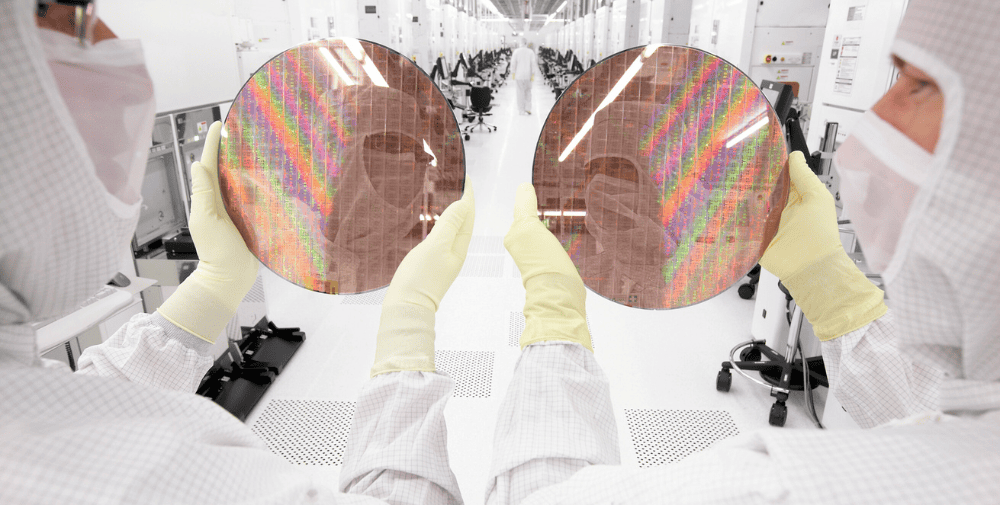
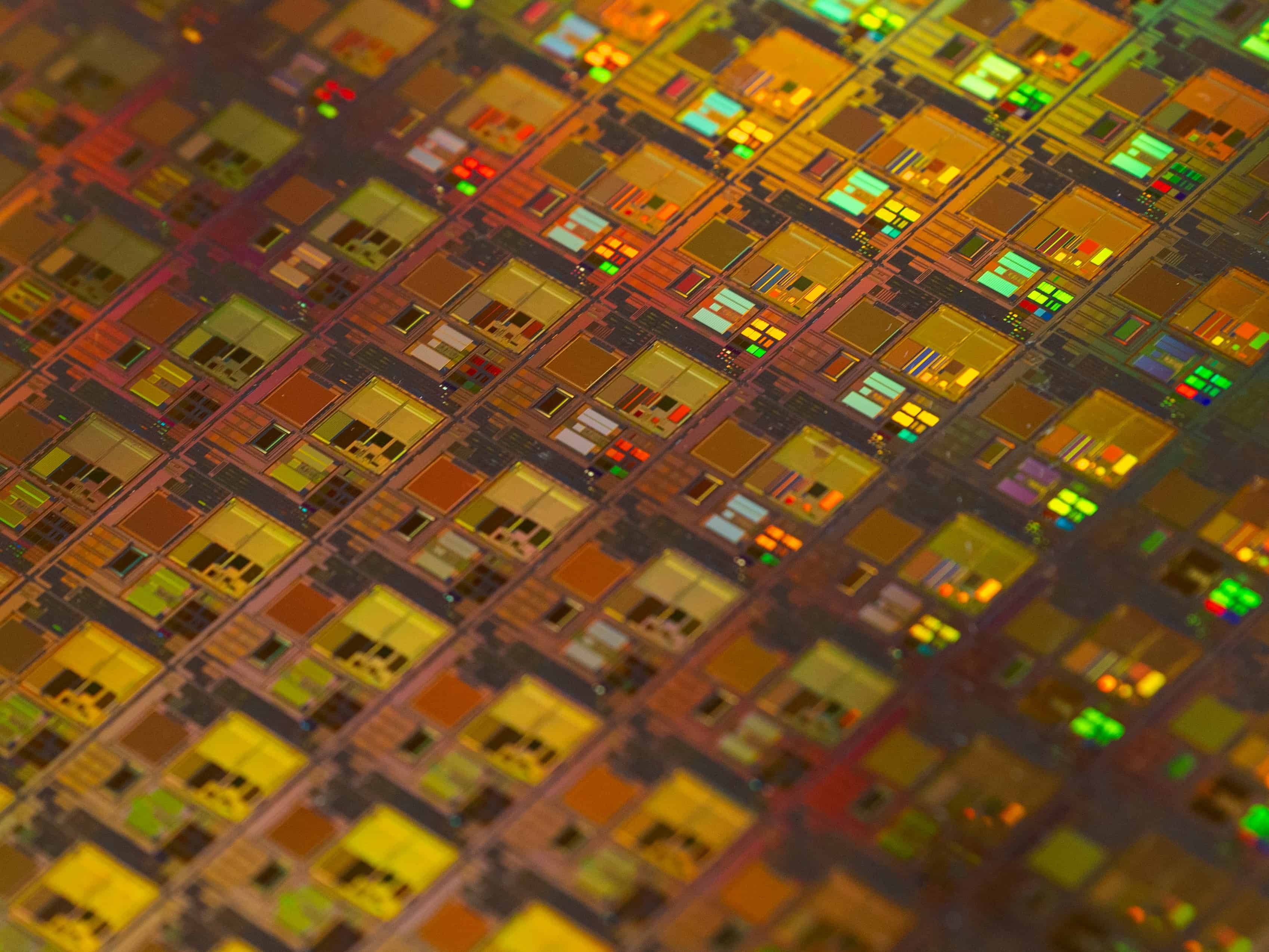
In the actual wafer manufacturing process, the chip is built up layer by layer. Lithography, etching, deposition, doping, cleaning, and polishing are repeated in hundreds of process steps.
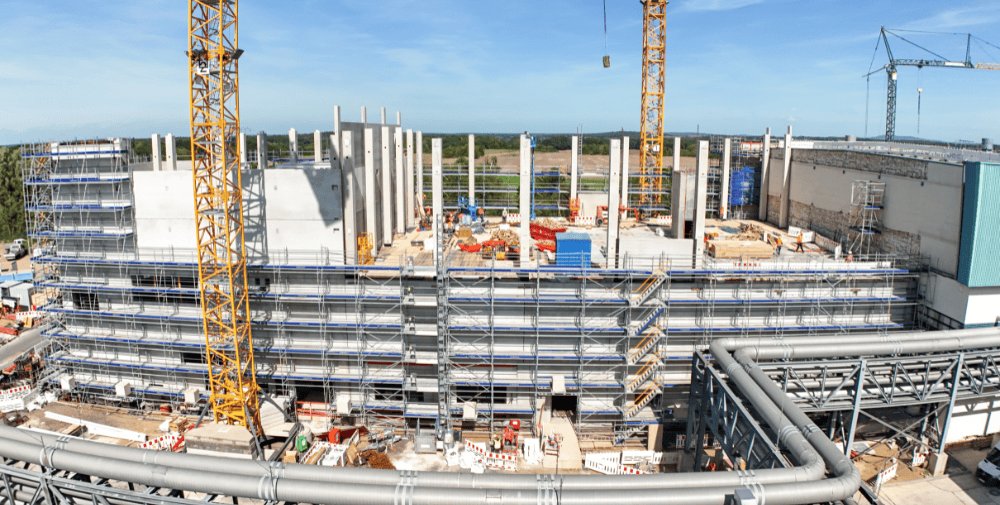
The key insight is this: A fab is not an isolated plant, but a highly complex network of machines, chemicals, gases, software, water, electricity, and specialists.
This is why a fab can remain vulnerable even with sufficient nominal production capacity.
Added to this is the enormous importance of energy and water supplies. Semiconductor fabs require large amounts of electrical energy and water, as well as an exceptionally high quality of supply. Production interruptions cannot simply be offset by adding an extra shift later on. Depending on the process, disruptions can jeopardize entire production batches or even render them completely unusable.
Energy Becomes Part of the Semiconductor Strategy
In Germany, industrial producer prices in July 2026 were 3.0 percent higher than the previous year’s level. Energy prices rose by 3.8 percent, while intermediate goods rose by as much as 5.4 percent. The trend was even more pronounced in wholesale prices. Non-iron ores, metals, and semi-finished metal products were 27.8 percent more expensive than a year earlier, while chemical products rose by 13.1 percent. Information and communication technology equipment rose in price by 9.0 percent at the wholesale level.
This does not mean that each of these price increases is directly attributable to semiconductor production or that they subsequently have a negative impact on it. However, the figures illustrate the economic pressure facing industrial value chains.
For microelectronics, there is an additional dimension: The growing need for AI and data centers is simultaneously increasing demand for chips and for electrical power. As a result, chip production, data centers, and other industries are, in some cases, competing for the same scarce resources.
Water: The Often-Overlooked Production Factor
In addition to electricity, water is a critical production factor. Wafers are cleaned and rinsed in numerous process steps. This requires ultra-pure water.
This creates another local dependency. A semiconductor facility needs not only a stable power supply but also a reliable water supply and high-performance treatment systems.
Security of supply must therefore increasingly be considered from a regional perspective. A company can be well diversified globally and still become vulnerable due to a local infrastructure bottleneck. This past summer and the water shortages that occurred across large parts of Germany were certainly just a harbinger. Power plants had to be shut down. Chip factories could also face this fate in the future. In Saxony, however, the region is already very well positioned and, with the construction of the new river water treatment plant, is already on the path to improving resilience and thus enhancing supply security.
Advanced Packaging: The New Bottleneck and New Management in the AI Era
The traditional notion that wafer fabrication is followed only by the “packaging” of the chip is outdated.
Modern high-performance processors are increasingly composed of multiple dies, memory modules, interposers, and other components. Especially in AI accelerators, the integration with High Bandwidth Memory plays a crucial role.
As a result, advanced packaging, chiplets, interposers, and high-quality substrates are gaining strategic importance.
The European IPCEI AST explicitly takes this development into account. Key technology areas include AI chips, chiplets, heterogeneous integration, and advanced packaging technologies.
It is precisely here that a significant shift in risk is evident. Even if wafer fabrication is expanded, total production may remain limited by bottlenecks in packaging or substrates.
Semiconductor companies, for their part, are therefore increasingly attempting to mitigate risks—or at least identify them early—through the use of artificial intelligence. What entails risks on the one hand also offers a potential solution on the other.
Assembly and Test: Europe’s Weakest Link
After wafer fabrication, chips must be sorted, assembled, and tested. These services are often provided by specialized OSAT companies.
Europe is significantly weaker in this area than in other parts of the semiconductor supply chain. A European chip may therefore still rely on capacity in Asia for several downstream production steps.
This is particularly relevant for security of supply because a semiconductor is only economically usable once it has been tested, packaged, and integrated into an electronic system.
“European chip production” must therefore not be equated with “European semiconductor value creation.”
Chip Design: Technological Sovereignty Begins Before the Fab
Another strategic dependency lies in design. The development of modern chips requires so-called EDA systems—highly specialized software for design, simulation, verification, and layout. Important IP building blocks are also sourced internationally. U.S. providers hold a particularly strong position in this area.
The implication is fundamental. While Europe may have its own production capacities, the development of certain modern chips can still be limited without access to key design tools. Technological sovereignty therefore does not begin when a manufacturing machine is turned on, but rather at the circuit design stage.
From the Fab to the Electronic System
Even after packaging and testing, the semiconductor value chain is far from over.
The chip is integrated into modules and printed circuit boards. In addition, there are:
- passive components,
- connectors,
- power supplies,
- displays,
- cooling systems,
- communication components,
- printed circuit boards, and electronic assemblies.
Only then do the actual products emerge—vehicles, machines, routers, servers, smartphones, medical devices, automation systems, and data centers.
This final stage is particularly important for Germany. The strength of German industry lies not primarily in the manufacture of the world’s most advanced general-purpose processors, but in the integration of semiconductors with the automotive sector, mechanical engineering, automation, sensor technology, power electronics, and industrial applications.
This is precisely why so-called mainstream and specialty chips are at least as relevant to the German economy as the spectacular 2- or 3-nanometer processors.
Skilled Workers: The Human Bottleneck
No value chain can function without qualified employees. In microelectronics, the demands are particularly high because physics, chemistry, materials science, electrical engineering, mechanical engineering, computer science, and production engineering all overlap.
Among others, the following are needed:
- chip designers,
- process engineers,
- microsystems engineers,
- chemists,
- materials scientists,
- automation specialists,
- mechanical engineers,
- plant and equipment experts,
- IT specialists,
- cybersecurity professionals.
The current trend in Germany is therefore noteworthy. According to data from the ifo Institute, 23.2 percent of companies reported a shortage of qualified workers in July 2026. In the telecommunications sector, the percentage rose to 31.1 percent—the highest level since October 2023. In the industrial sector, 18.7 percent reported a shortage of skilled workers.
An apparent contradiction is key here: More unemployed people do not automatically mean more available skilled workers. What matters is whether the qualifications of the available workforce match the job requirements. For microelectronics, this “mismatch” is particularly problematic because many tasks require years of specialization.
Logistics: The Physical Side of the Digital Economy
Semiconductors are small and valuable. At first glance, their supply chains therefore appear less dependent on traditional logistics than, say, those in the steel or chemical industries. But appearances can be deceiving. Microelectronics requires chemicals, gases, machinery, wafers, substrates, and components from all over the world. At the same time, sensitive products must be transported reliably and, in some cases, under special conditions.
Global crises and conflicts—such as the ongoing tensions between Iran and the U.S. and the resulting closure of the Strait of Hormuz, or the disruptions caused by the COVID-19 pandemic—demonstrate just how vulnerable transport routes and options can be.
The current low-water situation on the Rhine is already making this vulnerability apparent on German soil. In August 2026, extremely low water levels led to restrictions on one of Europe’s most important freight transport corridors. In some cases, cargo ships cannot be fully loaded. Companies must switch to road and rail transport. Reuters reported on the impacts on the chemical, energy, and steel sectors, among others.
The Bundesbank warned that low water levels are hampering freight transport and Germany’s industrial recovery. A particular problem is that alternatives to other modes of transport are limited. An inland waterway vessel cannot simply be replaced by a corresponding number of trucks. This results in additional costs, higher emissions, longer transit times, and new capacity bottlenecks.
The fact that CMA CGM is now charging an additional “inland emergency fee” due to disruptions caused by low water levels shows that the problem is already being reflected in transportation costs.
This means that a climate risk is directly becoming a supply-chain risk.
The Climate Factor Is Changing Logistics
The situation on the Rhine is not an isolated event. Extreme heat and drought are increasing the likelihood of restrictions on waterways and infrastructure across Europe. In early August, Reuters reported on the growing economic consequences of extreme heat and unusually low water levels.
This has an important implication for the microelectronics industry: Resilient supply chains require not only alternative suppliers but also alternative transportation routes. Road, rail, inland waterway, sea, and air freight must increasingly be viewed as interconnected systems.
The price factor comes into play
In addition to the physical availability of materials, raw materials, chemicals, gases, machinery, and equipment, cost pressures are also rising. In July 2026, German wholesale prices were 5.3 percent higher overall than in the same month of the previous year. Non-ferrous metals and semi-finished metal products saw particularly sharp price increases of 27.8 percent, as did chemical products, which rose by 13.1 percent. ICT equipment was 9.0 percent more expensive in the wholesale market than in the same month of the previous year.
Import prices also previously showed significant upward pressure on intermediate goods. In June, imported intermediate goods were 10.3 percent higher than the previous year’s level. Non-ferrous metals rose by 27.5 percent.
This creates a second supply chain problem. Even if materials are available, it may become economically more difficult to procure them.
Geopolitics turns economic dependencies into security issues
The semiconductor supply chain is exceptionally globalized.
- The U.S. is strong in EDA, IP, and parts of the manufacturing equipment.
- Taiwan is central to modern foundry manufacturing.
- South Korea plays a key role in memory production.
- Japan is strong in materials, chemicals, and equipment.
- The Netherlands is of outstanding importance in lithography.
- China dominates several raw material and processing chains.
- Europe has strengths in equipment, chemicals, specialty materials, sensor technology, power electronics, and certain industrial semiconductors.
This division of labor has created efficiency gains over decades. However, it also means that political conflicts can have a direct impact on industrial supply chains. Export controls are a particularly effective tool in this regard. They do not have to disrupt all trade. It is enough to target a small, hard-to-substitute node. This makes supply security a geo-economic challenge.
What Europe Should Actually Aim For
Complete self-sufficiency would be neither realistic nor economically sensible. Rather, the goal should be strategic resilience.
To achieve this, at least five questions must be answered:
- Which products are truly critical?
Not every chip is of equal strategic importance. For Germany, for example, power semiconductors, microcontrollers, sensors, communication chips, and certain automotive chips may be more important than any given high-end processor.
- Where are there single- or few-source dependencies?
Concentrations on either a single manufacturer or manufacturers from only one region are particularly critical, especially in light of geopolitical and geophysical risks.
- What production capacities must be available in Europe?
At strategic nodes, Europe should at least have its own capacity or reliable alternatives.
- Where is diversification sufficient?
Not all production needs to be brought back to Europe. For less critical products, multiple suppliers and geographic diversification may be the better solution.
- How quickly can we respond in the event of a crisis?
Supply chain resilience means more than just preventing bottlenecks. Europe must be able to detect disruptions early and respond quickly.
This very logic is an integral part of the European Chips Act. In addition to supporting research and production, it also provides for mechanisms to monitor the semiconductor value chain and respond to crises.
Germany is in a good starting position—but lacks complete sovereignty
Germany should not measure its strength by whether it can manufacture the smallest universal processor itself.
Rather, its strategic strength lies in a broad ecosystem:
- research,
- sensor technology,
- power electronics,
- automotive,
- mechanical and plant engineering,
- semiconductor equipment,
- specialty chemicals,
- microcontrollers,
- MEMS,
- photonics,
- industrial electronics.
The new IPCEI AST builds precisely on these strengths. The planned projects cover materials, manufacturing equipment, design, production, and packaging. Particular emphasis is placed on AI chips, photonic integrated circuits, chiplets, and heterogeneous integration.
This reflects a sound and important strategic approach: The goal is not only to strengthen the fab, but also the ecosystem surrounding it.
A New Definition of Supply Security
Current developments are leading to a fundamental reassessment. Supply security in microelectronics no longer means: “We have enough chips in stock.” Rather, it means: “We can continue to develop, produce, and operate critical electronic systems even if individual international supply chains fail.”
This requires action on several levels simultaneously:
- Material reserves, where appropriate.
- Diversified suppliers for critical inputs.
- European production capacities at strategic hubs.
- Alternative transportation routes.
- Stable energy and water supplies.
- A sufficient number of qualified specialists.
- In-house design and research expertise.
- Recycling of critical materials.
- Early warning and crisis response mechanisms.
And finally, an industrial policy that does not attempt to nationalize every stage, but rather identifies and reduces the most dangerous dependencies.
The real strategic challenge lies between the stages
The greatest risk may not lie in the individual stages themselves, but in the transitions between them.
An example:
A European company develops a chip. The design requires EDA software and IP from the U.S. The wafer is manufactured using European and Asian materials. Certain raw materials for this come from China. The manufacturing machine is partly from Europe but contains international components. Certain specialty chemicals come from Europe or Japan. Packaging takes place in Asia. The chip is then integrated into an industrial product in Germany. Transportation involves international seaports and European inland transport routes. Production requires stable electricity, water, and gas supplies. And specialists are needed for every step.
This is the actual European semiconductor value chain.
The crucial question is therefore not whether Germany or Europe can “do everything on their own.” That will be neither possible nor necessary for the foreseeable future. Rather, the crucial question is: Which dependency would trigger the largest chain reaction in the event of a failure, and what alternatives would actually be available then?
Conclusion: From a Chip Strategy to a System Strategy
Microelectronics has long since ceased to be an isolated technology sector. It is an infrastructure technology for virtually all modern industries—from vehicles and machinery to telecommunications and energy, all the way to artificial intelligence and data centers. That is why its supply security must also be viewed from a systemic perspective.
Current developments reveal three interconnected trends:
- Semiconductor production is becoming increasingly material- and technology-intensive. Bottlenecks can arise in raw materials, chemicals, gases, substrates, equipment, or packaging.
- Dependence on a small number of globally distributed centers is increasing. Geopolitical conflicts and export controls can therefore very quickly turn economic dependencies into security risks.
- Traditional infrastructure issues such as energy prices, power supply, water, skilled labor, and logistics must also be taken into account. The current low water levels on the Rhine, for example, clearly demonstrate that even a key digital industry remains dependent on very analog factors.
Europe possesses significant strengths in this regard. It is home to globally relevant companies and research expertise in lithography, equipment, chemicals, materials, sensor technology, power electronics, and industrial semiconductors. Germany can draw on a dense industrial ecosystem. Policy initiatives are now seeking to link these strengths across the entire value chain and further strengthen them.
The strategic task for the coming years is therefore not to create a completely self-sufficient European semiconductor industry. Rather, it is to identify critical nodes, diversify dependencies, secure key competencies, and enhance the ability to respond to disruptions.
After all, the most important lesson from the current supply chain problems is this: The security of supply for a chip begins in the raw material mines, continues through chemicals, energy, water, machinery, software, and skilled workers, and only ends when the finished chip has reliably reached a functioning electronic system.
Those who focus solely on the fabs and the chips therefore see only a small part of the actual supply chain problem and are thus unable to manage it effectively or mitigate it when necessary.
Photo: GlobalFoundries