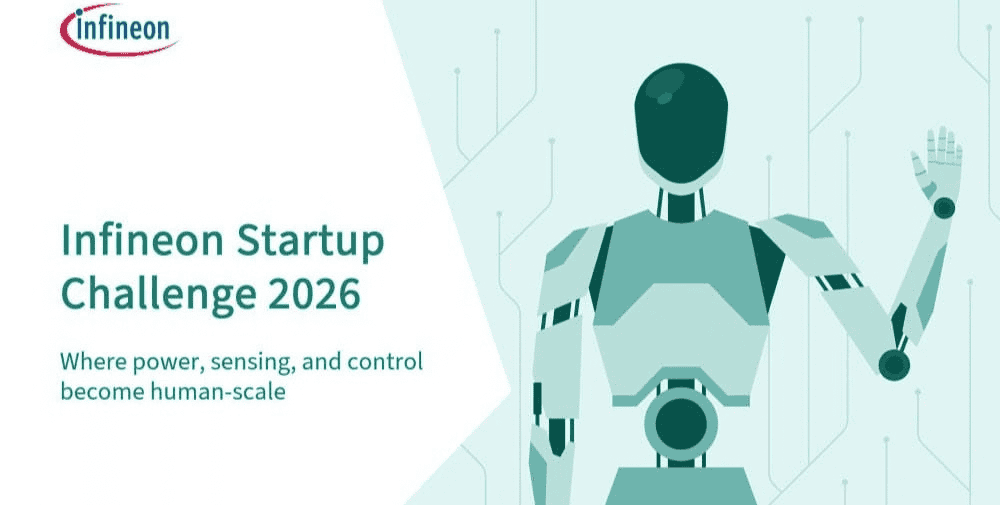
This year’s challenge focused on robotics and physical AI. Over the course of several months, the participating teams worked on innovative solutions for the next generation of intelligent systems. At Demo Day on October 6, 2026, held as part of EBSCON in Graz, the finalists presented their technologies to a panel of experts as well as representatives from industry, research, and the investment community.
The teams were evaluated on the degree of innovation, technological feasibility, market potential, and their ability to successfully scale their solutions.
The Winners
1st Place: Adaptronics s.r.l. from Italy
Technology: Electroadhesive gripping technology for robotic applications
Adaptronics impressed the jury with an innovative electroadhesive—i.e., electrostatically adhesive—gripping technology capable of securely grasping a wide variety of objects without the need for traditional suction cups or mechanical grippers. The solution opens up new possibilities for applications in robotics, logistics, and packaging and also offers potential for future space robotics applications.
The jury particularly praised the high degree of innovation, the versatility of the technology, and its great potential for industrial use.
2nd Place: COSMOKE from South Korea
Technology: Flexible robotic skin for tactile perception
COSMOKE is developing a magnetic, flexible robotic skin capable of detecting touch, pressure, and interaction over large areas. The technology gives humanoid robots a significantly better sense of touch in their environment and enables safer and more intuitive collaboration between humans and machines.
Particularly noteworthy are the technology’s high relevance to humanoid robotics and its ability to significantly improve safety and the quality of interaction.
3rd Place: TECHiFAB from Germany
Technology: AI-based motor control for robotic actuators
TECHiFAB uses innovative semiconductor technology to make the control of robotic actuators faster, more energy-efficient, and safer. The goal is to optimize control performance directly within the powertrain of humanoid robots while significantly improving energy efficiency. The jury was particularly impressed by the innovative approach of combining artificial intelligence and sensor technology for the next generation of high-performance robotic systems.
– – – – –
Related Links
www.infineon.com
Image: Infineon