September 24, 2026. Nina Huittinen Receives the Fritz-Straßmann Prize for Outstanding Achievements in Nuclear Chemistry
Categories

September 24, 2026. Nina Huittinen Receives the Fritz-Straßmann Prize for Outstanding Achievements in Nuclear Chemistry
Categories
Tags
Contact info
Silicon Saxony
Marketing, Kommunikation und Öffentlichkeitsarbeit
Manfred-von-Ardenne-Ring 20 F
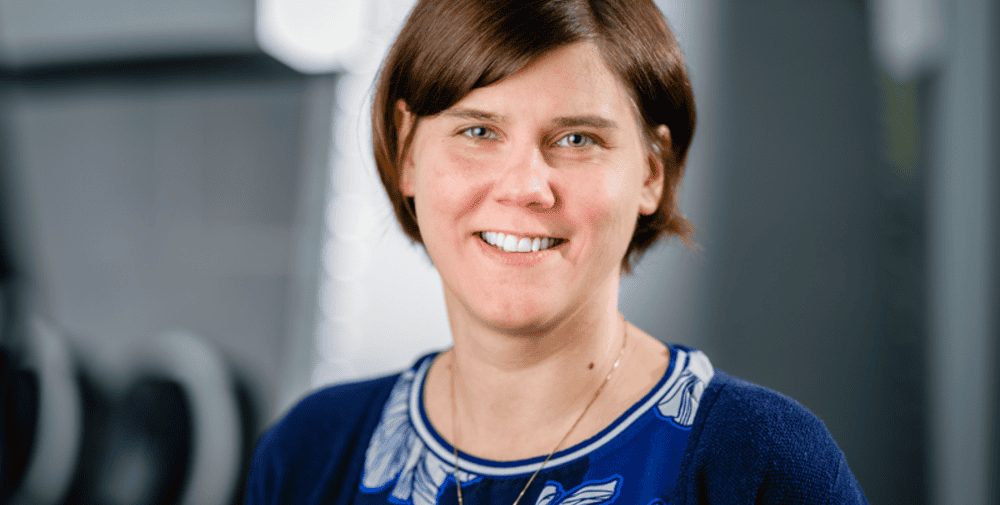
How do radioactive elements behave when they come into contact with minerals and other solids? And how can they be permanently incorporated into stable materials? Prof. Nina Huittinen has been addressing these questions for many years. She is now receiving the Fritz-Straßmann Prize from the German Chemical Society (GDCh) for her scientific achievements in the field of nuclear chemistry. The award will be presented during the Nuclear Chemistry Division Conference from September 21 to 24, 2026.
At the Institute of Resource Ecology at the Helmholtz-Zentrum Dresden-Rossendorf (HZDR), Huittinen heads the Department of Solid-State Chemistry of Radionuclides. Her research focuses on actinides such as curium and americium and the question of how these radioactive elements interact with solid materials.
“Nina Huittinen combines excellent basic research in radiochemistry with questions of great societal relevance. The Fritz-Straßmann Prize honors her scientific work and at the same time highlights the importance of expertise built up over the long term in this demanding field of research. We are very pleased that she is continuing her successful research at HZDR,” says Prof. Thorsten Stumpf, Director of the HZDR Institute for Resource Ecology.
This involves basic research directly related to the safe disposal of radioactive waste. To assess how radioactive substances behave over long periods of time, it is necessary to know what chemical bonds they form, how stable the resulting structures are, and under what conditions radionuclides remain bound in a material or can be released from it.
“I am fascinated by the fact that, using spectroscopic methods, we can visualize processes at the atomic level that determine how radioactive elements behave in a material over the long term. We need this fundamental understanding to be able to specifically evaluate and further develop materials for the safe disposal of radioactive waste,” explains Huittinen.
Luminescence spectroscopy plays a special role in Huittinen’s research. Curium is particularly well-suited for this purpose: Its luminescence is highly sensitive to changes in its immediate chemical environment and can be studied even at very low concentrations. The radioactive element thus serves the researchers, in a sense, as a probe that provides information about its environment at the molecular level.
Huittinen combines luminescence spectroscopy with methods from solid-state chemistry. In this way, she investigates how actinides are incorporated into crystalline materials, what positions they occupy there, and how this incorporation affects the structure and properties of the materials.
A review article published in late 2025 in the journal *Chemical Society Reviews*, to which Huittinen contributed, highlights the possibilities that curium luminescence spectroscopy offers today. In it, the authors highlight the development and application of the method over the past two decades—from reactions at mineral-water interfaces to the incorporation of curium into solids to complexation reactions in solution.
Of particular interest are ceramic materials that could serve as stable waste forms for certain types of radioactive waste. The key factor here is not only whether radionuclides can be incorporated into their crystal structure. The materials must also remain structurally stable over the long term and withstand the radiation emitted by the incorporated radionuclides.
By combining spectroscopic and structural analyses, Huittinen and her team are able to trace such material properties back to processes at the atomic level. The results thus lay the groundwork for evaluating the structural stability and radiation tolerance of ceramic waste forms—important criteria for long-term safety in the disposal of radioactive waste.
Huittinen earned her Ph.D. in 2013 from the University of Helsinki with a dissertation on the interactions of trivalent actinides at mineral-water interfaces. She then joined the Institute of Resource Ecology at the HZDR as a postdoctoral researcher, where she later led her own research group and eventually headed a department. Since 2024, she has been a professor of radiochemistry at Freie Universität Berlin.
Huittinen remains closely connected to the HZDR: As head of the “Solid-State Chemistry of Radionuclides” division at the Institute of Resource Ecology, she continues her research on radioactive solids in collaboration with colleagues in Dresden.
With the Fritz-Straßmann Prize, the Nuclear Chemistry Division of the GDCh honors established scientists for outstanding achievements in the field of nuclear chemistry. The prize, which is typically awarded every four years and comes with a cash award of 2,500 euros, honors the chemist Fritz Straßmann. Together with Otto Hahn, he succeeded in providing experimental evidence of nuclear fission in 1938; Lise Meitner and Otto Frisch provided the physical explanation shortly thereafter.
Prof. Nina Maria Huittinen | Head of Solid-State Chemistry of Radionuclides
Institute of Resource Ecology at HZDR
Tel.: +49 351 260 2148 | Email: n.huittinen@hzdr.de
Media contact:
Simon Schmitt | Head and Press Spokesperson
Communications and Media Department at HZDR
Phone: +49 351 260 3400 | Cell: +49 175 874 2865 | Email: s.schmitt@hzdr.de
The Helmholtz-Zentrum Dresden-Rossendorf (HZDR) conducts research in the fields of energy, health, and matter. The focus is on the following questions:
The HZDR develops and operates large-scale research facilities that are also used by external researchers: the Ion Beam Center, the Dresden High-Field Magnet Laboratory, and the ELBE Center for High-Power Radiation Sources. It is a member of the Helmholtz Association, has seven locations (Dresden, Freiberg, Görlitz, Grenoble, Leipzig, Rostock, and Schenefeld near Hamburg), and employs nearly 1,500 staff members—including about 700 scientists, 200 of whom are doctoral candidates.
You need to load content from reCAPTCHA to submit the form. Please note that doing so will share data with third-party providers.
More InformationYou are currently viewing a placeholder content from Turnstile. To access the actual content, click the button below. Please note that doing so will share data with third-party providers.
More InformationYou are currently viewing a placeholder content from Facebook. To access the actual content, click the button below. Please note that doing so will share data with third-party providers.
More InformationYou are currently viewing a placeholder content from Google Maps. To access the actual content, click the button below. Please note that doing so will share data with third-party providers.
More InformationYou are currently viewing a placeholder content from OpenStreetMap. To access the actual content, click the button below. Please note that doing so will share data with third-party providers.
More InformationYou are currently viewing a placeholder content from Instagram. To access the actual content, click the button below. Please note that doing so will share data with third-party providers.
More InformationYou are currently viewing a placeholder content from X. To access the actual content, click the button below. Please note that doing so will share data with third-party providers.
More Information