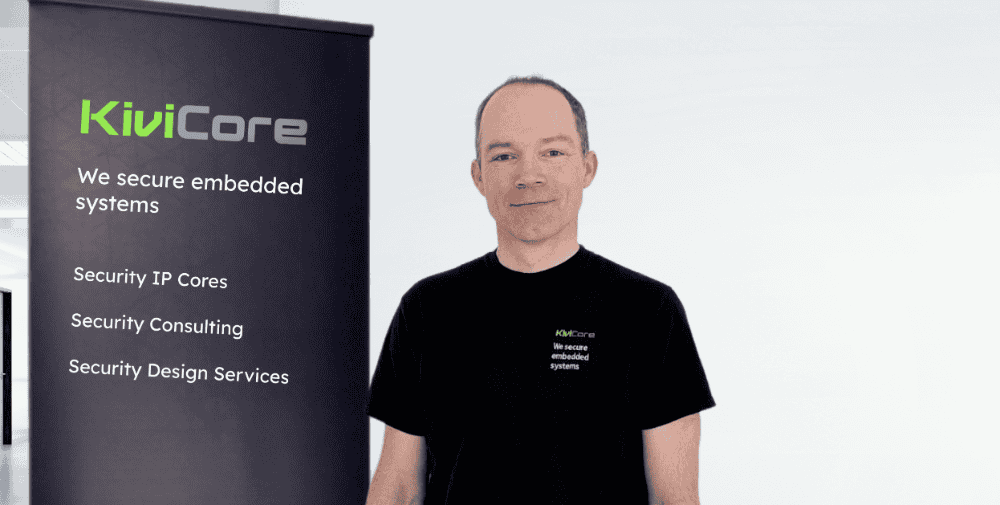
1. Dr. Deicke, can you remember the moment when you decided to support SPARK? What specifically moved you, what brought about your decision?
I first became aware of SPARK via the Silicon Saxony newsletter. I already knew the Calliope Mini from the Long Night of Science, where my children had their first experience with it. I was immediately impressed by the concept because it makes technology very accessible to children in a playful way. It therefore quickly became clear to me that if we as a company had the opportunity to support a project like this, then we should do it.
I am impressed by the many volunteers who are involved as coaches and look after primary school children. In my view, a lot of responsibility lies with us as a society. We decide how we want to shape our common future. We are all called upon to do this.
2. How is your commitment to SPARK reflected in your start-up’s self-image and in your corporate culture?
We are a regionally anchored technology company and want to make a contribution not only to the region through our products and services, but also, if possible, to society in general. Our corporate culture is characterized by personal responsibility and trust. Everyone has the freedom to actively drive issues forward, but also knows that support is always available within the team. This principle of empowerment and at the same time creating the right framework is also reflected in our commitment to SPARK.
3. In your opinion, what influence does early STEM education have on personal talent development? And what relevance do you think it has for a high-tech cluster like Silicon Saxony, e.g. in terms of skilled workers?
I think it’s important that children have the opportunity to explore and try out different areas, be it culture, sport or technology. STEM education is certainly very important for the Silicon Saxony high-tech cluster, although I don’t think that every child has to find themselves in this field later on. It would be wonderful if children could discover their own interests and develop them further.
4. What technical skills and soft skills should children of primary school age be taught through a project like SPARK – beyond just programming skills?
From my point of view, the process is important: formulating an idea, thinking about how to implement it, trying it out. And then, when you run into problems and realize that not everything is so easy, to keep at it anyway, to try to find a solution together and to discover that special feeling when it finally works.
5. Your start-up develops embedded security solutions. What parallels do you see with the basics that children learn through programming with the Calliope Mini?
The basic way of thinking is very similar: you break down a problem into smaller steps, develop a solution and check whether it works. This is also the core of developing secure embedded solutions, just at a different level of complexity and with clear requirements for reliability and security. The Calliope Mini teaches this way of thinking at a very early stage and in an understandable way.
6 Saxony is considered one of the most dynamic high-tech locations in Europe. What role does your company play in the regional innovation landscape and how will Saxon primary school children benefit from this in the future? To what extent does regional involvement like yours help children to perceive technology as an opportunity and not as something abstract or difficult?
Saxony has developed into a strong high-tech location and we are making our contribution by supporting companies in making their products and systems safer. Our contribution to the project is to make complex technologies more understandable and hopefully more accessible. When children experience at an early age that technology is something they can shape themselves, it loses its abstract character. This is crucial if curiosity is to turn into genuine interest later on.
7. Many start-ups focus primarily on product development and growth in the initial phase. Why do you consciously invest in promoting young talent?
It’s not always easy for young people today to discover a passion for a subject that lasts part or even all of their lives. I think it’s a shame when I see that young people don’t know what they want to do after leaving school. Supporting them at this point can provide guidance or help them to develop further, e.g. by going to university. I have always found it important to give young people the opportunity to try out a new subject area. At KiviCore, we basically started immediately to give young talents an insight, for example through internships or student projects. In one case, this only recently resulted in a permanent position.
8. If you were at a Calliope workshop and a child had just written their first mini-program: what would you say to them at that moment?
I would ask the child how they are feeling right now. That moment when something works for the first time is something special. Becoming aware of this is often much more valuable than any external praise.
My co-founder Dr. Andreas Weder experienced such an entry into the STEM world himself: he took his first steps on a Robotron K8915, a DDR 8-bit computer. This early experience sparked his interest in programming and electronics. Looking back, it is very clear how important such initial points of contact are. Very often, it is a concrete experience that triggers curiosity and creates access to a topic.
From this perspective, early STEM offerings are very important. They give children the opportunity to try things out and actively experience technology. This can develop an interest that later influences their career choice.
Dr. Deicke, thank you very much for the interview and your commitment!