Spatial light modulators (SLMs) enable the precise and high-speed modulation of light in amplitude and phase at the microscopic level. As a key technology for modern optical applications, they form the basis for advances in microlithography, microscopy, and adaptive optics, as well as in holographic image and pattern generation and quantum computing. The institute develops SLMs based on microelectromechanical systems (MEMS). These SLMs constitute a versatile technology platform for wavelengths ranging from deep ultraviolet (DUV) to near-infrared. Building on this foundation, Fraunhofer IPMS implements application-specific solutions tailored to the requirements of its partners.
New Fields of Application for SLM Technologies
Recent advances in area light modulation are expanding the range of possible applications:
In microscopy, samples can be selectively illuminated at high resolution using precisely controlled uniaxial tilting mirrors. In the semiconductor industry, modulation techniques in the UV and DUV spectral ranges help optimize lithography processes. The technology also offers potential for material processing: Using two-axis tilting mirrors, light can be redistributed with minimal loss, thereby increasing the efficiency of material processing. For 3D holography, precise phase modulation enables the creation of true three-dimensional images. Unlike 2D images with a simulated sense of depth, this results in a genuinely three-dimensional hologram.
The SLMs developed by Fraunhofer IPMS can precisely control light intensity. Amplitude modulation opens the door to applications such as laser beam shaping, optical signal processing, and advanced display technologies.
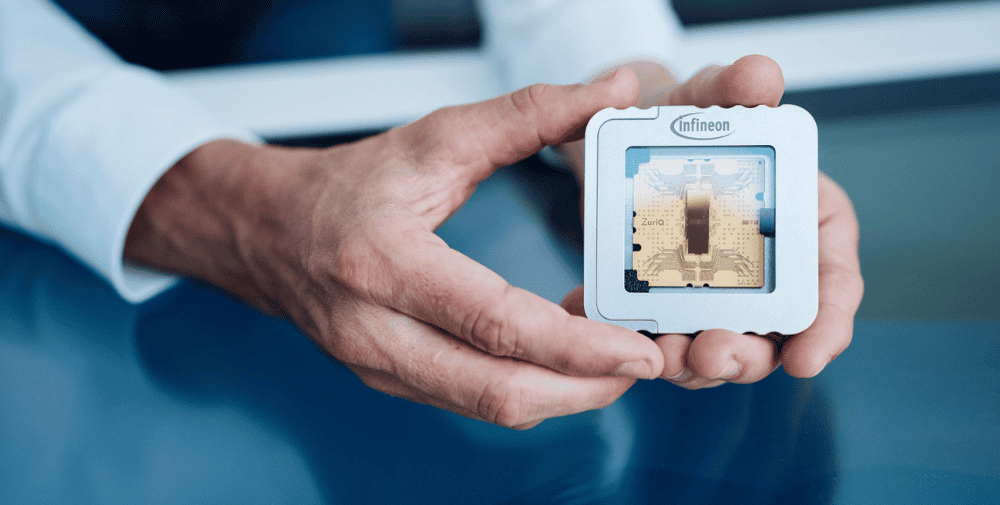
In quantum computing, SLMs shape laser beams using holographic techniques. This creates focused light spots that act as optical tweezers to trap individual neutral atoms. This allows numerous atoms to be controlled simultaneously in flexible configurations. The light patterns can be dynamically adapted to different quantum operations. The operation of the SLMs in the ultraviolet wavelength range also supports the necessary excitation of the atoms.
Evaluation Kits for Versatile Area Light Modulators
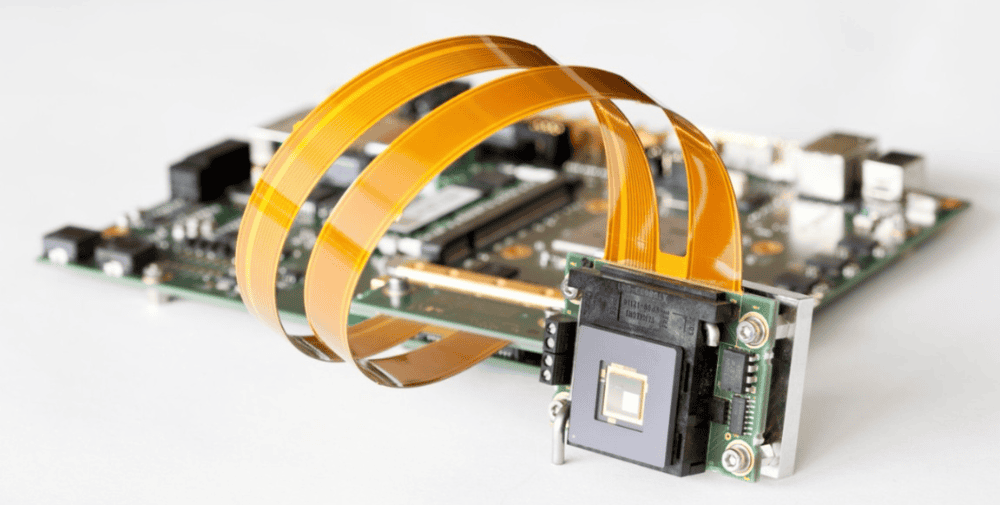
To enable interested companies to test area light modulators, Fraunhofer IPMS offers evaluation kits. With such a kit, different mirror architectures can be tested on the same platform. Depending on the actuator used, the micromirrors can be tilted or deflected vertically.
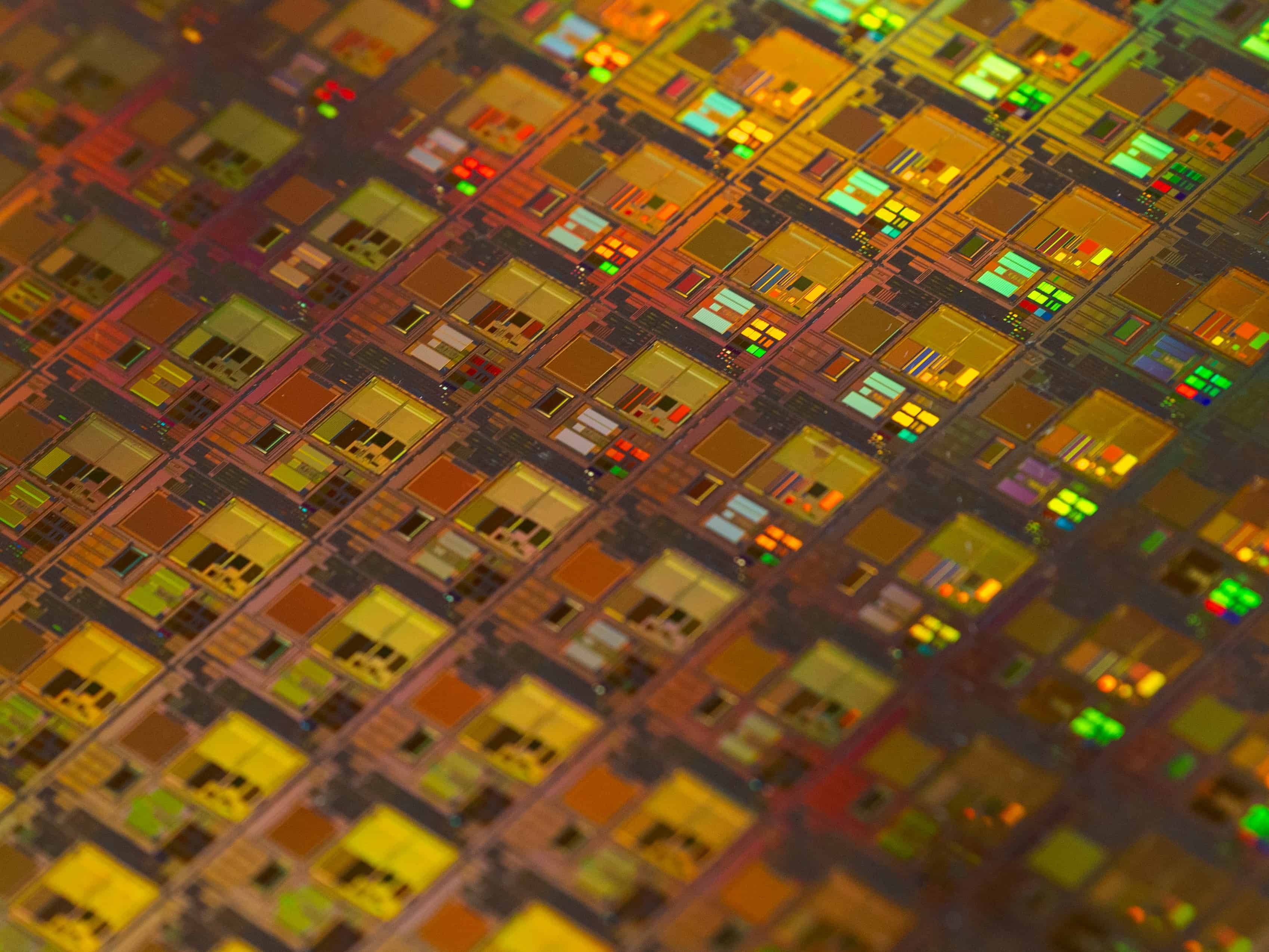
The “DIFFRACTIVE MEMS KIT” is based on an array of analog tilting micromirrors and enables high-resolution optical amplitude control at high speeds. Alternatively, the kit is also available with an analog down-mirror array for phase modulation. “A diffractive optical device does not simply reflect light like a conventional mirror. Its specially designed structure diffracts the light, thereby directing it in specific directions,” explains Dr. Michael Wagner, head of the Spatial Light Modulators business unit at Fraunhofer IPMS. “Our diffractive MEMS device features 256 × 256 individually controllable tilting mirror elements, each with an edge length of 16 micrometers. Each mirror element can be moved independently and almost continuously between its initial position and a defined tilt angle. This allows the light to be precisely directed in different directions. The device is suitable for both DUV light and longer wavelengths.”
In addition to the micromirror chip, the kit includes the complete control electronics, quick-start software, and a flexible PC interface library.
Potential applications range from 3D displays and mirror-based adaptive optics to quantum computing with neutral atoms. At Photonix Japan, Patrick Recknagel will present the technology and explain its key principles, performance characteristics, and use cases for industry and research. The technology could thus foster innovative industrial solutions and scientific advances, for example in astronomy and quantum computing.
Collaboration Opportunities: From proof of concept to customer-specific development
Fraunhofer IPMS offers companies and research institutions various collaboration models. “Our evaluation kits enable customers to validate SLM technology in their own application environments. For specific requirements, we develop custom SLMs—from the initial feasibility analysis through pilot-scale production. Our expertise ranges from design and process development to system integration,” says Wagner.
About Fraunhofer IPMS
Fraunhofer IPMS is a leading international research and development service provider for electronic and photonic microsystems. Our technologies are used in industry, mobility, biotechnology, and medical technology. At the same time, we focus on key future fields such as quantum technologies and neuromorphic computing. Through our research on green microelectronics, we are contributing to a resource-efficient and sustainable world.
– – – – –
Related Links
👉 www.ipms.fraunhofer.de
Photo: Fraunhofer IPMS