Mr. Arnold, testing is a recurring theme throughout your career: you have almost 40 years of expertise in the development of test solutions for semiconductor innovations. For 30 of those years, you worked for semiconductor manufacturer Infineon. You hold 14 patents in the field of testing and have been involved in numerous projects as a test engineer and more than 60 projects as a test and DFT concept specialist. What makes the subject so fascinating for you personally?
The subject of testing has actually been a constant companion in my professional life from the very beginning. Shortly after completing my degree in communications engineering at the end of the 1980s, I had the unique opportunity to help set up a research laboratory for semiconductor testing at Friedrich-Alexander-Universität Erlangen-Nürnberg, where I worked on innovative testing methods.
Then, as now, it is always a very special moment when a new semiconductor chip is developed and has to be tested to ensure that it is free of defects before it can be used worldwide. The tension in the air when it is put into operation for the first time, the challenge of which tests need to be carried out to put it through its paces, as well as the tension and nervousness of everyone involved to see whether it will work as planned – it’s always like a little adventure that gets the whole team excited.
This is exactly what has always driven me during my time at Infineon – the curiosity and excitement of not only being part of a new product development from the very beginning, but also being part of technological breakthroughs for future generations.
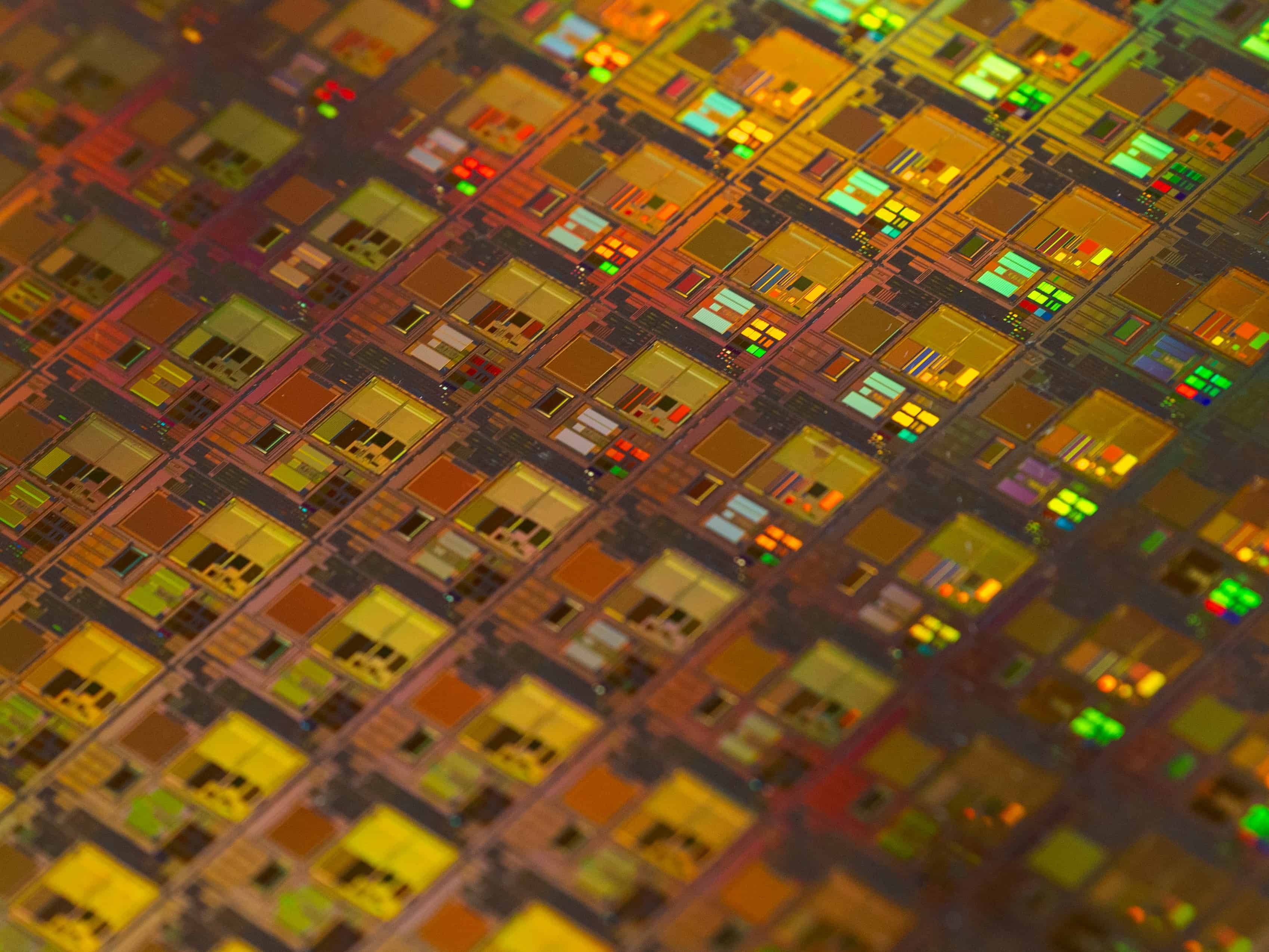
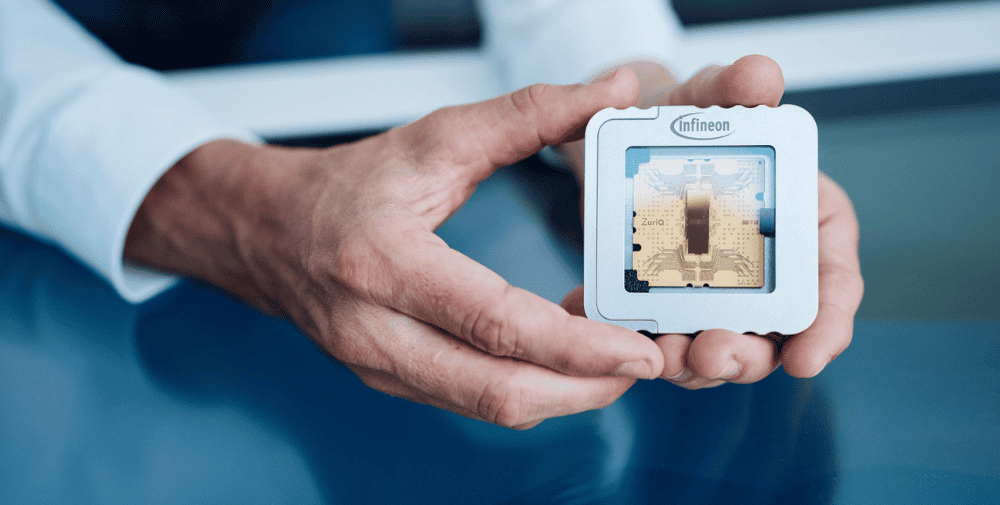
From digital and mixed-signal components, SRAM (Static Random Access Memory) and ROM (Read Only Memory) modules to high-speed or power components – I have been able to develop test and DFT concepts as well as state-of-the-art test methods for semiconductors for all these modules and assemblies in countless successful and complex projects during my professional career, thus testing the performance, quality and functionality of new chips.
This creates the prerequisites for maximum reliability and safety in many areas of our daily lives. For example, a car today contains between 60 and 90 microcontrollers. These semiconductor components are the “control centers” in modern cars and control a variety of processes – from emergency braking and lane departure warning systems to airbag deployment and door unlocking. Even a small defect in a single one of these semiconductor components can have a major impact on the entire system and pose risks to occupants, pedestrians and other road users. This is precisely why it is so crucial to detect these potential hazards at an early stage and to ensure that chips function perfectly – for uncompromising quality, absolute reliability and the greatest possible safety as the basis for unrestricted trust in technology, in line with the ETRC motto “Innovation needs Trust”.
I am all the more pleased to be part of the ETRC with my expertise and to be able to contribute to precisely these adjustments of state-of-the-art technologies in order to further strengthen trust in innovations.
What tasks are you focusing on in your new role within the ETRC to increase this trustworthiness in microelectronics, and what are you already excited about?
Thanks to my personal and decades of practical experience, I have first-hand knowledge of the industry’s needs in the field of semiconductor testing and reliability assessment. This understanding of the industry is an important key to shaping the further expansion and development of the ETRC in a future-oriented manner. Our goal is to develop new test strategies and reliability routines for semiconductor technologies that meet the increasing global demands of state-of-the-art microelectronics. Making them more robust, highly efficient, fail-safe and durable is a central concern of our work.
In doing so, a particular focus will be on innovative test approaches in order to uncover completely new error mechanisms in the future that could not previously be identified using established procedures and test methods. This should provide even better support for safety-critical areas in particular, such as the automotive industry, and make driving even safer in the future, for example. I find it particularly exciting to be thinking about tomorrow today and to be researching and working on future topics now that will only become relevant in a few years’ time.
I also find it important to pick up on new developments in the field of testing at an early stage through exchanges at international conferences and make them usable for the ETRC. Whether as a speaker or as part of the scientific program committee – conferences, meetings and specialist events always provide valuable new food for thought and fresh perspectives. I would like to continue to actively pursue this in the future and enrich the work of the ETRC with strong impulses from the industry.
With all our activities, we as the ETRC make a decisive contribution – to strengthening the future viability of Chemnitz as a business location, to consolidating Saxony’s role as an important high-tech region and to increasing the visibility of Europe’s excellence in microelectronics. I am very excited to be part of this vision.
What encounters are you particularly looking forward to?
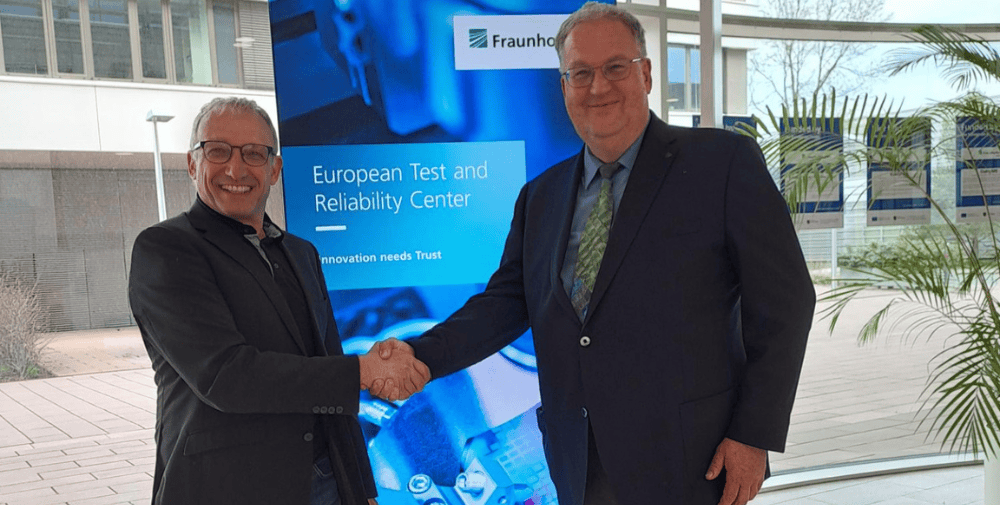
I am particularly looking forward to working with my ETRC colleagues. I very much appreciate the opportunity to exchange ideas with many new contacts, but also to grow together again with long-standing companions and valued experts in the industry to form a powerful team. I have a long and trusting professional history with both Prof. Dr. Harald Kuhn and Prof. Dr.-Ing. Ulrich Heinkel, Head of the Chair of “Circuit and System Design” at Chemnitz University of Technology.
I am also delighted to meet my mentor Prof. Dr. Werner Wolz again in Chemnitz. He is now an honorary professor for “Fundamentals of testing and test-friendly design” at Chemnitz University of Technology and gave me access to the subject of testing more than 30 years ago. I learned an incredible amount from him, for which I am still very grateful to this day. He showed me that growth and innovation come from having the courage to leave the beaten track. Because only those who dare to try the unknown can grow beyond themselves and open their eyes to new things and thus to progress.
When you’re not working on new test strategies for semiconductor innovations, where can you be found on a free afternoon and what motivates you personally every day?
I have a soft spot for vintage and classic American cars. I love going to classic car meetings in my 1966 Ford Mustang or taking my 2007 Ford Mustang on trips into the countryside. I also enjoy traveling and discovering new places – whether in the USA, Europe or Asia. This is where I find balance and inspiration for new projects and upcoming challenges – both professionally and privately.
Thank you very much, Mr. Arnold, for this interview. We wish you every success and a good start in your new role.
– – – – – –
Further links
👉 www.enas.fraunhofer.de
Photo: Fraunhofer ENAS