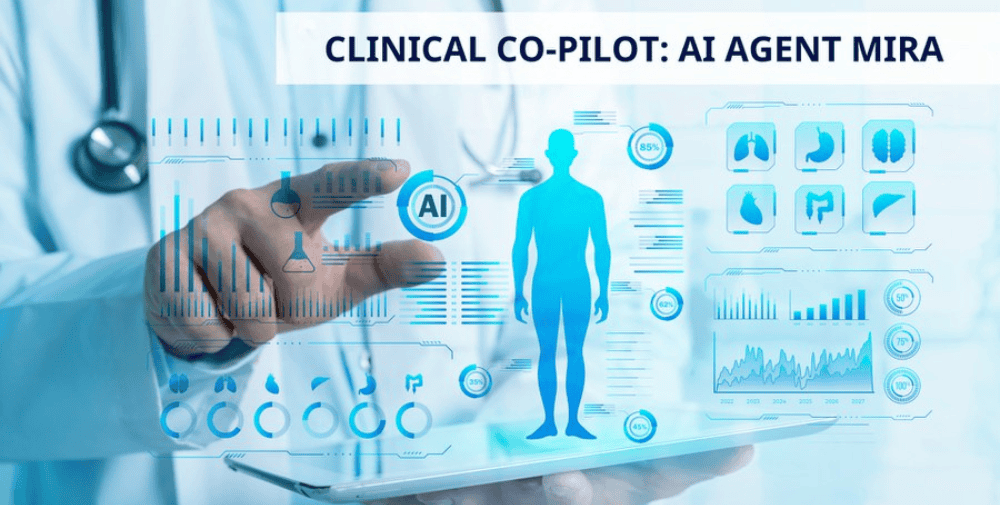

Everyday clinical practice is complex. Doctors must inquire about patients’ medical histories, collect lab results, request and interpret imaging and microbiological findings, weigh diagnostic options, review medications, and plan further treatment steps. Existing AI applications are often not integrated into clinical workflows and are tailored only to individual tasks. The team led by Prof. Kather has developed MIRA (Medical Intelligence for Reasoning and Action), an autonomous medical AI agent that operates in a secure test environment within electronic health records. In the cases studied, MIRA achieved performance on par with that of physicians and, in some instances, surpassed the physician control group in diagnostic accuracy. “Our AI agent was able to independently perform clinical tasks within the test environment. MIRA identified missing information, requested tests, interpreted findings in accordance with guidelines, and prepared treatment decisions. AI tools are designed to support healthcare professionals and free up more time for patient care; at the same time, they must meet the highest standards of safety, transparency, and reliability. With MIRA, we were able to demonstrate that this is possible,” says Dyke Ferber, a physician and first author of the published study.
MIRA as a Clinical Co-Pilot for Routine Tasks
Anything intended for use in everyday clinical practice must function with absolute reliability and be fully understood. The research team provided the developed agent with precise instructions on which tasks to perform and which tools and information were available for that purpose. For the retrospective study, the researchers used more than 500 real patient cases. These were simulated in a mock emergency room. In addition, MIRA interacted with virtual patients whose responses were based on the documented medical histories from the real patient records. This enabled MIRA to take a medical history, ask targeted questions, obtain missing information, and subsequently incorporate this information into clinical decision-making. MIRA and the control group of physicians processed the same cases using a controlled clinical toolkit comprising eleven instruments and more than 85,000 possible courses of action, including laboratory, microbiological, and imaging tests, medication prescriptions, procedures, and admission decisions. “We see this as a glimpse of how AI could transform medicine. I view AI agents as akin to autopilots in an airplane. Such systems can support and relieve the burden on healthcare professionals by taking over routine tasks, but the responsibility ultimately always remains with the medical staff,” adds Prof. Jakob N. Kather, Professor of Clinical Artificial Intelligence at the EKFZ for Digital Health at TU Dresden and an oncologist at Dresden University Hospital. The study’s findings highlight how important the close integration of medicine, computer science, and clinical research is for the development of trustworthy AI systems. “The study makes it clear how digital innovations can help support clinical processes. The excellent research environment at Dresden’s university medical center ensures that safety, transparency, regulatory compliance, and accountability are considered from the very beginning,” says Prof. Esther Troost, Dean of the Faculty of Medicine at TU Dresden. “The results demonstrate the potential that AI agents hold for medicine. The fact that MIRA achieves high diagnostic accuracy in real patient cases and prepares treatment decisions in accordance with clinical guidelines underscores the importance of this technology for the future of medicine. For further development, the focus is now on how we can integrate such innovations into clinical practice in a safe and transparent manner for the benefit of patients,” says Prof. Uwe Platzbecker, Chief Medical Officer of Dresden University Hospital.
Publication
D Ferber, L Hilgers, C Höper, B Kinny-Köster5, JN Eckardt, K Egger-Heidrich, M Bill, MMK Schneider, J Clusmann, L Kadric, M Oehme, M Mayrhofer-Schmid, A Oeser, G Wölflein, IC Wiest, JM Middeke, AJ Iafrate, D Truhn, D Jäger, JN Kather. “Towards Autonomous Medical Artificial Intelligence Agents,” Nature 2026. doi: 10.1038/s41586-026-10675-5
Link: https://www.nature.com/articles/s41586-026-10675-5
Else Kröner Fresenius Center (EKFZ) for Digital Health
The EKFZ for Digital Health at the Faculty of Medicine of the Technical University of Dresden (TUD) and the Carl Gustav Carus University Hospital Dresden was founded in September 2019. It is funded by the Else Kröner-Fresenius Foundation with a grant of 40 million euros for a period of ten years. The center focuses its research activities on innovative medical and digital technologies at the direct interface with patients. The goal is to fully harness the potential of digitalization in medicine to sustainably improve healthcare, medical research, and clinical practice.
– – – – –
Related Links
👉 https://tu-dresden.de
Photo: Canva / jittawit21