“The new research campus offers the opportunity to integrate the location’s strengths even more closely and to continue successfully implementing structural change. The interplay of applied research, academic education, and non-university research institutions creates space for new ideas and collaborative initiatives. This benefits Cottbus and the Lusatia region as a center for research and innovation—while also enhancing their visibility and significance beyond the region,” says Prof. Dr.-Ing. Anke Kaysser-Pyzalla, Chair of the DLR Executive Board.
Dr. Dietmar Woidke, Minister President of the State of Brandenburg, explains: “With the new campus, Cottbus continues to raise its profile as a research and innovation hub. Through the integration of strong partners—including the Fraunhofer Society, the IHP–Leibniz Institute, the German Aerospace Center (DLR), and the BTU Cottbus-Senftenberg—state-of-the-art jobs are being created here to address the critical challenges of our future: from energy infrastructure to alternative propulsion systems.”
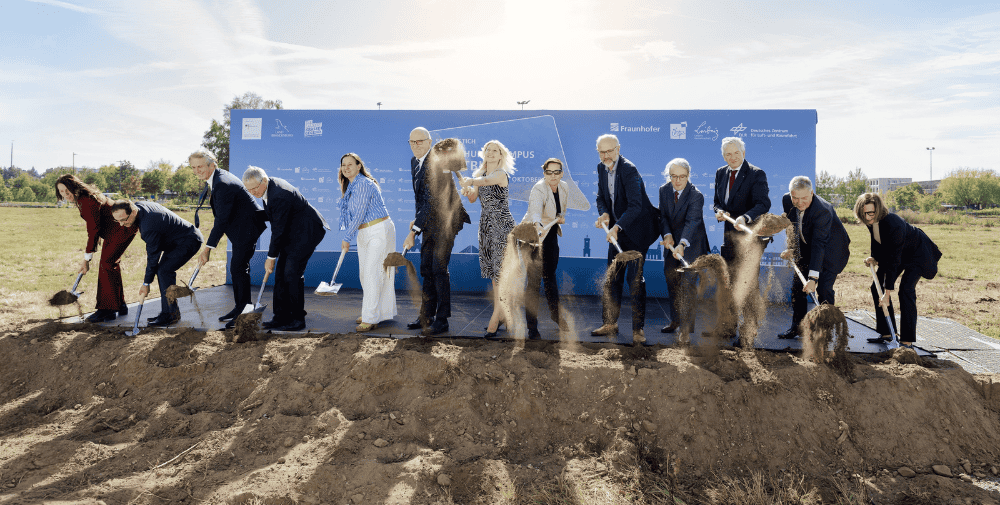
A modern research campus is being built on the approximately 50,000-square-meter site and is scheduled for completion by 2030. This project is funded by the federal government through the Coal Regions Investment Act and co-financed by the State of Brandenburg. The DLR will be represented there in the future by two institutes: the Institute for Electrified Aviation Propulsion and the Institute for Low-Carbon Industrial Processes. In addition, the IHP – Leibniz Institute for Innovative Microelectronics, the Fraunhofer Institute for Photonic Microsystems, and the Fraunhofer Institute for Energy Infrastructures and Geotechnologies will be located there.
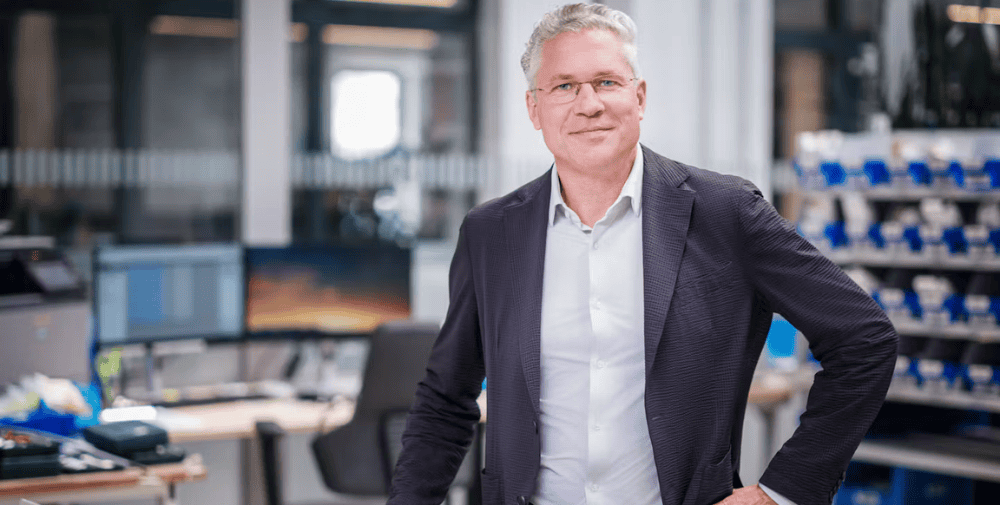
“Many of the questions we’re working on today can no longer be answered within a single discipline. Sensor systems for medicine, for example, require microelectronics, materials research, and AI all at once. With this new building, we’re bringing these disciplines under one roof, right next to the BTU and our partners on campus. The research we conduct here is intended to be applied in Lusatia and will provide important impetus for structural change,” emphasizes Prof. Dr.-Ing. Gerhard Kahmen, Scientific and Technical Director of the IHP.
“The groundbreaking ceremony for the first construction phase marks an important milestone for the further development of the Lausitz Science Park. As a central component of structural change, it will bring together research institutions and innovative small and medium-sized enterprises, further integrating science, business, and technology transfer on a local level. With the new Fraunhofer buildings, we are providing important impetus for new jobs, innovations, and value creation in the region. The Cottbus Research Campus is thus helping to further strengthen Lusatia as a future hub for energy technologies, intelligent microsystems, and industrial transformation,” says Prof. Holger Hanselka, President of the Fraunhofer Society.
Aviation and Energy Research in Cottbus
Founded in 2019, the DLR Institute for Low-Carbon Industrial Processes conducts research on the decarbonization of industry. This is a key component of the energy transition and achieving national climate goals. A key focus is on collaboration with industry partners in technology transfer as well as on partnerships with other research institutions.
The DLR Institute for Electrified Aviation Propulsion, founded in 2020, conducts research on innovative hybrid-electric and all-electric aviation propulsion systems. Researchers develop and test key technologies and integrated propulsion systems, investigate their environmental impacts and service life, and devise strategies for their safe operation. With this focus, the institute operates at the intersection of basic research and application.
Research as a Driver of Growth
With the phase-out of lignite-fired power generation and support from the Structural Strengthening Act, new prospects for the region’s economic and scientific development are emerging in Lusatia.
Where the conventional energy sector shaped the region’s economic landscape for decades, a modern hub for science and business with an international outlook is emerging. New fields of research, innovative companies, and close collaboration between academia and industry are creating skilled and long-term attractive jobs. At the same time, new opportunities are emerging for training, higher education, and professional development.
Lausitz as an Attractive Place to Live and Work
The people in the region are also benefiting from this development. Lusatia should increasingly become a place where young people can begin their vocational training or college studies, find career opportunities, and build their long-term future. Attractive jobs and educational opportunities help retain skilled workers in the region, bring back graduates after they complete their studies or training, and attract new talent to Lusatia.
For the region to realize its full potential as a hub for science and business, investments in modern research infrastructure, campus facilities, and efficient transportation links are crucial. The physical proximity of research, education, and business facilitates collaboration, accelerates the transfer of knowledge into practice, and increases the region’s appeal to innovative companies and investors.
The research landscape thus becomes an important component of structural change. It strengthens the region’s economic foundation, creates new opportunities for skilled workers and young people, and helps establish Lusatia in the long term as an innovative, competitive, and livable location.
– – – – –
Further Links
👉 www.dlr.de
Photo: Christiane Schleifenbaum