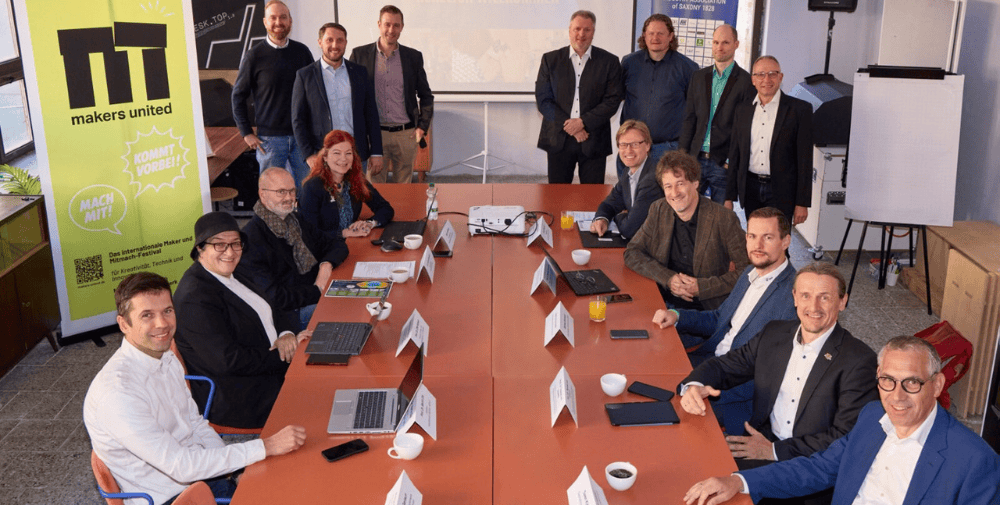
Prof. Dr. Thomas von Unwerth, Vice Rector for Knowledge Transfer and Continuing Education at Chemnitz University of Technology, welcomed the participants on behalf of the Rector. He emphasized that knowledge transfer does not merely refer to the flow of research results into industry. It is equally important, he noted, to bring questions and ideas from companies into the university and to jointly develop new approaches based on them.
Prof. Dr. Martin Dix, President of the Industrieverein Sachsen 1828, pointed out the continuing need for action regarding knowledge and technology transfer in southwestern Saxony. A region with numerous small and medium-sized enterprises, in particular, needs low-threshold formats that facilitate access to research, accelerate collaborations, and at the same time better harness the potential of international students for the regional economy.
Building Bridges from Research to Application
Three concise research pitches demonstrated just how short the path from research to application can be at Chemnitz University of Technology.
- Prof. Dr. Olfa Kanoun, holder of the Chair of Measurement and Sensor Technology, presented current work on smart sensors, real-time diagnostics, and energy-autonomous wireless sensor systems. Applications range from battery and cable diagnostics to predictive maintenance and industrial process monitoring, as well as flexible sensors and smart wearables.
- Prof. Dr. Bernhard Wunderle, holder of the Chair of Materials and Reliability of Microtechnical Systems, provided insights into the reliability assessment and thermal management of microelectronic systems. The focus is on materials characterization, simulations, and physically based lifetime models, as well as new testing methods. These help predict failures early on and make electronics for industrial applications more robust.
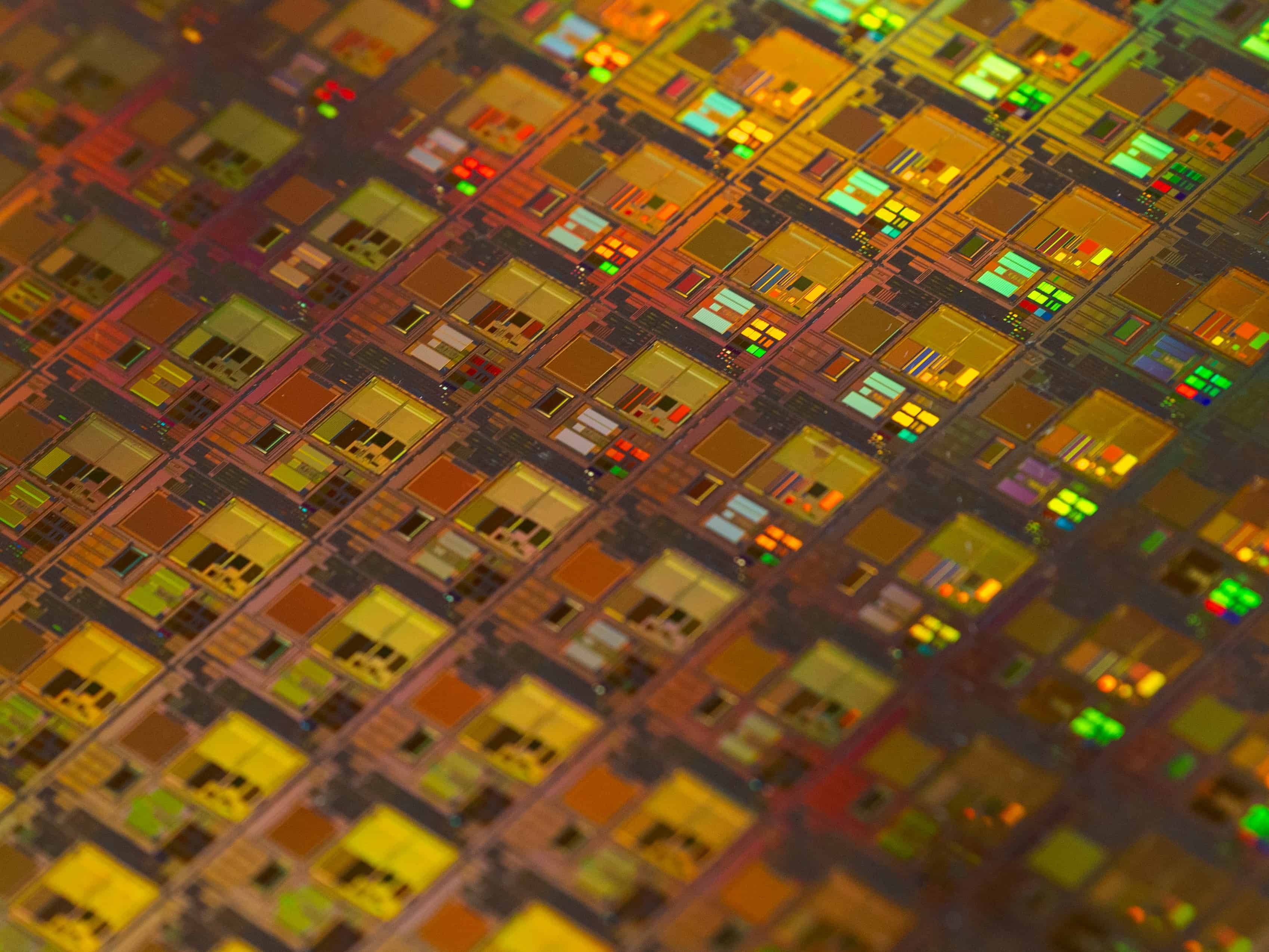
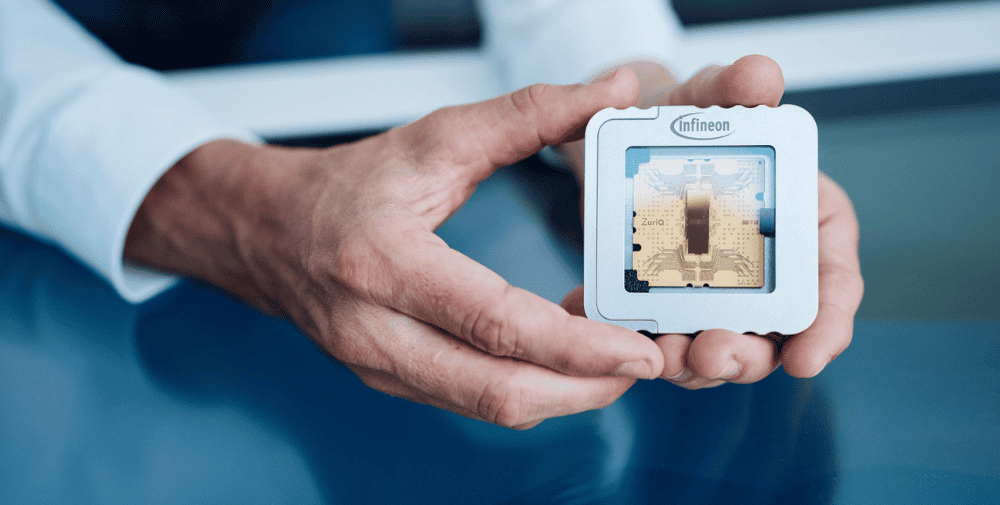
- Prof. Dr. Harald Kuhn, holder of the Chair in Smart Systems Integration and Director of the Center for Micro- and Nanotechnologies at Chemnitz University of Technology, presented the nearly complete value chain covered in Chemnitz—from chip design and wafer fabrication through testing and packaging to integration into specific systems. He advocated making even greater use of these existing capabilities in collaboration with companies from the region and developing new partnerships, initially based on technical content.
Strengthening Technology Transfer in the Region
Representatives from companies including FLEXIVA automation & Robotics, IMM electronics, EDC Electronic Design Chemnitz, Volkswagen Sachsen, KSG, NILES-SIMMONS-HEGENSCHEIDT, and FusionSystems, as well as the Fraunhofer IWU. They identified specific needs arising from industrial practice—ranging from intelligent machine tool technology to electronics development and sensor integration, all the way to the transformation of automotive manufacturing.
“We want to raise the profile of research at Chemnitz University of Technology and bring companies together with researchers at an early stage. Science2Industry should not remain a one-time exchange. It is crucial that these discussions lead to concrete points of contact and, in the next step, to joint projects,” emphasized Katrin Hoffmann, Managing Director of the Industrieverein Sachsen 1828.
The organizers will continue Science2Industry as a regular technology transfer breakfast. In the future, the research fields presented will be further developed and made accessible to additional companies beyond the scope of the event. In this way, Chemnitz University of Technology and the Industrieverein Sachsen 1828 aim to raise broader awareness of existing expertise and further strengthen technology transfer in the region.
(Author: Katrin Hoffmann)
– – – – –
Related Links
👉 www.tu-chemnitz.de
Photo: Ines Escherich