The field of magneto-ionics deals with the electrical control of magnetic materials through electrochemical reactions. While in conventional electromagnets large electric currents flow through coils to generate and control magnetic fields, in magneto-ionics much smaller currents are sufficient to electrically control magnets. As in a battery, the current is used to electrochemically transform the magnetic material, thereby altering its magnetic properties. This promising approach for novel magnetic data storage devices and actuators is being researched at the Chair of Electrochemical Sensors and Energy Storage, led by Prof. Karin Leistner, as part of the ERC project “ACTIONS.” In collaboration with the Chair of Polymer Chemistry, led by Prof. Michael Sommer, various polymer electrolytes were synthesized and tested for this purpose. The results of the study were published in the renowned journal “Advanced Functional Materials.”
In the study presented, various types of polymer electrolytes were investigated:
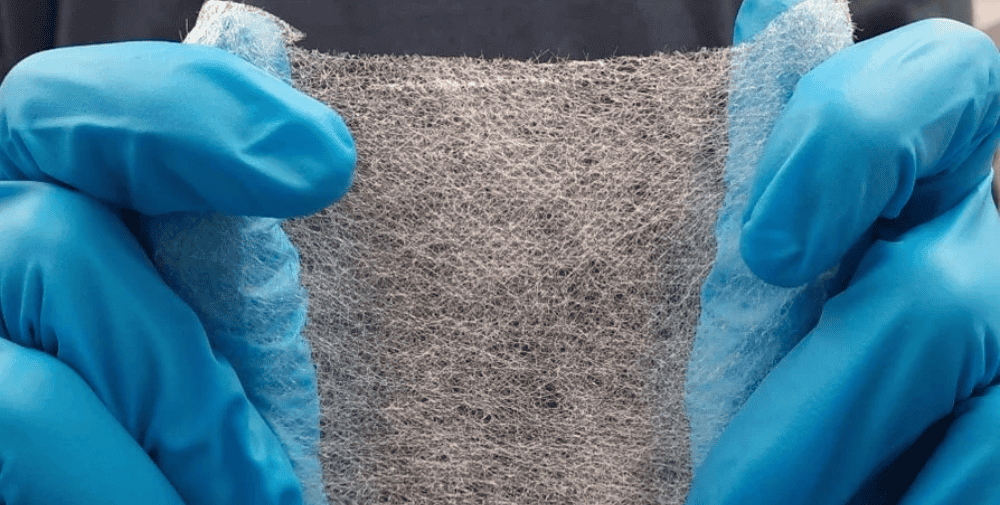
- electrolyte-impregnated polymer films that store small amounts of liquid like a nonwoven fabric,
- gel-like electrolytes that transport ions within the polymer,
- and special membranes that conduct only negatively charged ions.
For all of these polymer-based electrolyte systems, the magneto-ionic effect was experimentally demonstrated in thin layers of iron or palladium/cobalt multilayers.
Batteries with non-liquid electrolytes can no longer leak
The interdisciplinary work, which was co-funded by the “KOSMOS” project of the Sächsische Aufbaubank (SAB), shows that conventional liquid electrolytes can be completely replaced by polymer electrolytes in these magneto-ionic material systems. Furthermore, the reversibility and energy efficiency of the magneto-ionic effect were significantly improved by polymer electrolytes. This effect was attributed to the suppression of side reactions, particularly the electrochemical decomposition of water.
Future data storage devices based on the magneto-ionic effect can benefit from the versatility of such polymer electrolytes and significantly simplify their practical integration into components. Since, unlike liquid electrolytes, no solid housing is required to prevent leakage, they also enable more flexible designs for electrochemical cells.
Publication: Markus Gößler, Richard Weber, Michael Sommer, Karin Leistner. Magneto-ionic devices with polymer-based electrolytes, first published October 8, 2026, https://doi.org/10.1002/adfm.78857
Further information: Dr. Markus Gößler, Chair of Electrochemical Sensors and Energy Storage, Phone 0371 531-37533, Email: markus.goessler@chemie.tu-chemnitz.de
Author: Markus Gößler
– – – – –
Related Links
👉 www.tu-chemnitz.de
Photo: Danny Quint