“Cybercriminals exploit every technical opportunity that comes their way. And artificial intelligence makes fraud easier and more believable. A familiar voice or a video that looks real dispels suspicion for many people—at least at first—and that’s exactly what the perpetrators are counting on,” says Susanne Dehmel, a member of Bitkom’s executive board. “Anyone who receives a shocking or unusual phone call or an urgent payment request should always verify the information through a second channel before taking any action.”
Malware Replaces Online Fraud as the Most Common Scam
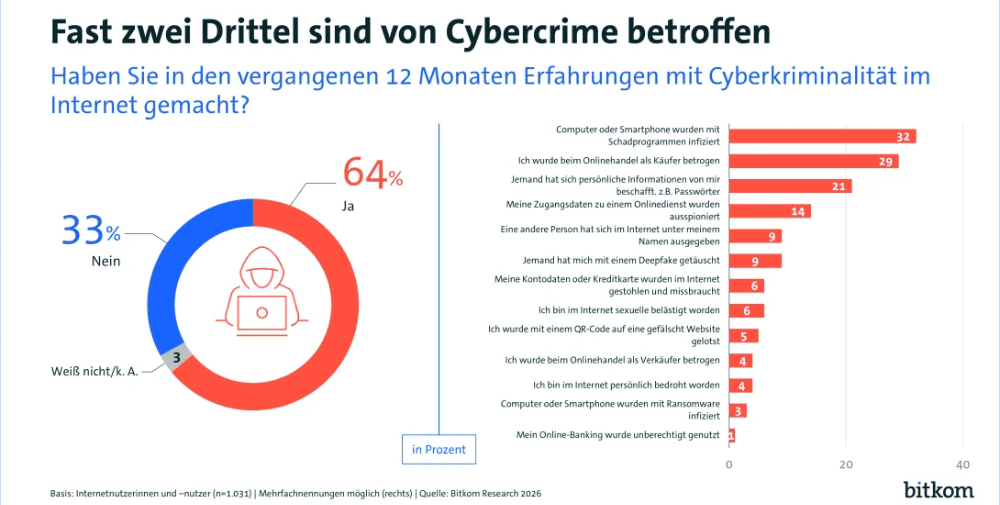
But even as new scams like deepfakes are on the rise, most victims continue to fall prey to well-known methods. At the top of the list are malware programs such as viruses, which infected 32 percent of computers or smartphones. These are followed by online shopping fraud (29 percent) and phishing via email, text message, or phone (21 percent), both of which have become less common.
In 14 percent of cases, login credentials for online services such as social networks or shopping sites were stolen. Nine percent report that someone impersonated them online, and 6 percent had their account information or credit card details stolen and misused. “Login credentials and digital identities are worth their weight in gold to criminals. Once someone gains access to an email account, they can use it to take over other accounts, order goods in the victim’s name, or deceive friends and family,” says Dehmel. “A unique, strong password for every service, along with two-factor authentication or new solutions like passkeys, is the most effective protection.”
In addition to deepfakes, criminals are also using other new methods, such as fake QR codes that lead to fraudulent websites. Five percent have been lured into this trap. Fraud in online sales (4 percent) and ransomware attacks, in which data is encrypted and a ransom is demanded (3 percent), are comparatively rare. Only 1 percent reported unauthorized use of their online banking access. In addition, people are also targeted personally online: 6 percent were sexually harassed, and 4 percent were threatened.
Average Loss of 233 Euros
The various types of attacks have one thing in common: financial losses. 58 percent of those affected suffered personal financial losses due to cybercrime. For another 5 percent, retailers, banks, or insurance companies covered the losses. On average, those affected suffered losses of 233 euros.
Few Victims Go to the Police
After an incident, most take action on their own first: 45 percent of those affected changed their password or other security information, while 17 percent deleted or canceled their account on the affected platform. 42 percent sought advice from friends or family. Those affected are less likely to turn to external sources: 36 percent contacted the company whose platform was used for the crime, 13 percent contacted authorities such as the Federal Office for Information Security (BSI), and 8 percent consulted a lawyer. Only 19 percent—just under one-fifth—of those affected filed a criminal complaint with the police; a year ago, that figure was 26 percent. 18 percent did not react at all.
Even for those who do file a complaint, the experience is often disheartening. In 22 percent of cases, the investigation was closed; 27 percent say the report, in their view, achieved nothing. In another 22 percent of cases, the investigation is still ongoing, and 15 percent have not received any feedback at all. Positive experiences are rarer: 19 percent received helpful information or support, and 13 percent felt that their case was taken seriously. Six percent got their money or data back, and the case was resolved for only 2 percent. “Every crime that goes unreported is missing from the big picture, and perpetrators who aren’t prosecuted will continue their activities,” says Dehmel. “The police and the judiciary must be equipped with sufficient personnel and technology to ensure that reports lead to successful investigations.”
Often, people simply don’t know where to turn. As before, 54 percent of internet users do not know who to turn to after a cyberattack. People expect more from the police and policymakers: 87 percent want a greater police presence in the digital space, and 86 percent want harsher penalties for cybercrime.
– – – – –
Related Links
👉 www.bitkom.org
Graphic: Bitkom