As data rates in electronic systems push into the 112G and 224G ranges, physical PCB parameters and shrinking safety margins are making modern electronics design extraordinarily complex. Given the enormous time pressure to bring products to market and the growing shortage of experienced verification experts, development teams have historically been forced into a problematic compromise: overly strict design constraints at the outset and inadequate verification in the end. As a result, critical signal integrity errors are often discovered late in the design cycle, triggering verification bottlenecks, manual data investigations, and costly re-spins.
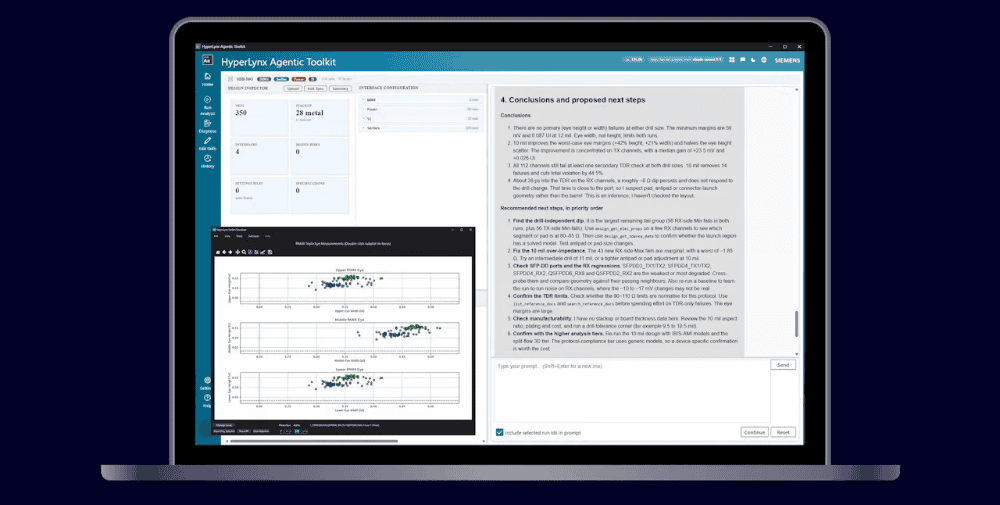
The toolkit is based on Siemens’ HyperLynx™ software and combines domain-specific AI agents with a physics-based simulation of signal and power integrity. Engineers can define verification goals using natural language, while an orchestration agent coordinates specialized agents for SerDes, DDR, signal, and power integrity analyses. These agents can execute simulation tasks, extract relevant parameters, examine results, and evaluate performance based on the design’s safety margins.
“Teams developing electronic systems must verify faster, more complex designs within ever-tighter timeframes. AI is a powerful tool in this regard. But when it comes to signal and power integrity, a result you can’t trust is worse than no result at all,” says Matt Bromley, head of the Electronic Board Systems division at Siemens. “That’s why we developed the HyperLynx Agentic Toolkit to enable automated workflows based on proven, physics-based simulations. Engineers benefit from the speed of agentic AI and gain the confidence to act on their insights.”
“Electronics teams are using AI most intensively where the problems are greatest. According to our research, 80 percent of companies are already pursuing active AI initiatives in analysis and verification—more than in any other development stage. However, 60 percent cite the reliability and quality of AI results as the biggest hurdle. In verification, AI is only valuable if engineers can trust what it delivers,” says Chad Jackson, CEO and Chief Analyst at Lifecycle Insights. “The hidden cost factor in using AI in electronics is engineers’ time. Three out of four respondents spend at least half a day each week figuring out how to use AI before it even begins to contribute to productive work. Since most expect improvements of 10 to 25 percent, this learning curve can eat up a large portion of the benefits. Using AI in proven engineering tools gets you to your goal faster than if every team were to figure it out on its own.”
Faster Verification of High-Speed Electronic Systems
As electronic systems become faster and more complex, engineers must sometimes analyze ever-larger amounts of simulation data when verifying signal and power integrity. The HyperLynx Agentic Toolkit uses domain-specific AI for tasks such as simulation analysis, specification research, trend detection, and the investigation of potential failure causes.
Expanding Siemens’ agent-based AI approach to the entire EDA domain
The HyperLynx Agentic Toolkit expands Siemens’ use of domain-specific agent-based AI in the field of electronic design automation, building on the introduction of the Questa One Agentic Toolkit. It also complements Siemens’ overarching approach to AI-powered engineering workflows with Fuse EDA AI Agent and Intelligence Center X. By combining agentic AI with established engineering analyses, Siemens helps engineers automate verification tasks while grounding the results in physics-based simulations.
Availability
The HyperLynx Agentic Toolkit is scheduled to be available to select customers on an early access basis in the fourth quarter of 2026. General availability will follow at a later date. For more information about HyperLynx software and Siemens’ AI-powered electronic systems design, visit https://blogs.sw.siemens.com/electronic-systems-design/2026/11/09/the-hyperlynx-agentic-toolkit-agentic-ai-for-electronic-systems-verification/
Siemens Digital Industries Software supports companies of all sizes in their digital transformation with software, hardware, and services from the Siemens Xcelerator Business Platform. Siemens software and the comprehensive digital twin enable companies to optimize their design, engineering, and manufacturing processes to transform today’s ideas into sustainable products of the future—from the chip to the complete system, from the product to the process, across all industries. Siemens Digital Industries Software—Accelerating transformation.
– – – – –
Related Links
👉 www.siemens.com
Photo: Siemens