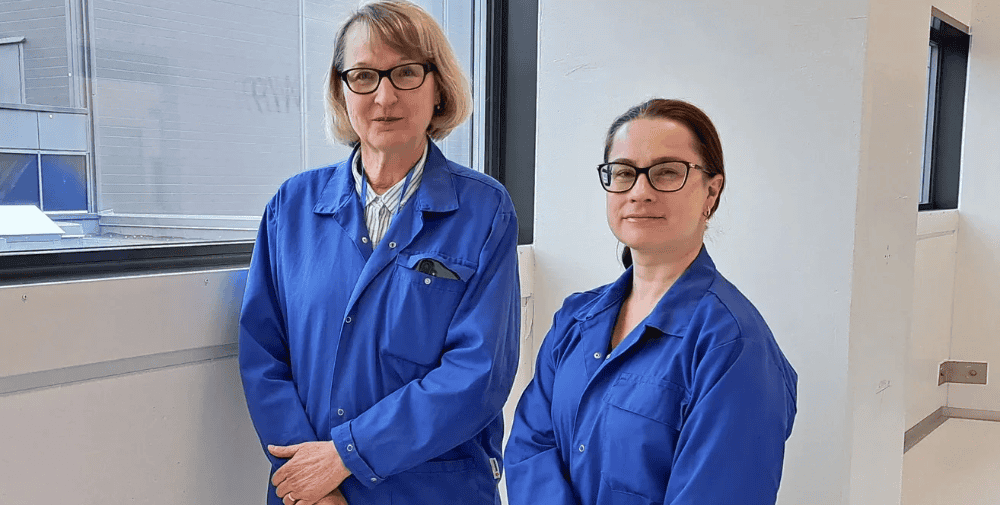
Sari Pirhonen has been with Okmetic since 1986 and has served as Senior Manager, Quality, since 2009. Over the years, she has witnessed how quality management has evolved—moving away from inspection-oriented processes toward a company-wide approach.
“In the past, quality was inspected. Today, quality is managed. In the future, quality will be predicted,” she says.
This is also changing how companies approach their work. Processes across different departments are closely interlinked, so a change in one area can impact other functions and, ultimately, the customer experience.
Quality professionals use methods such as root cause analysis and the “5 Whys” technique to understand why problems occur. Rather than focusing solely on fixing a problem, the goal is to identify the underlying causes and prevent similar problems from recurring.
This preventive approach has also changed how companies define quality and who is responsible for it.
Quality Across the Entire Company
The definition of quality has expanded over the years. Customers still expect products to function as intended, but quality encompasses far more than the product itself. Reliable deliveries, information security, sustainability, consistency, and smooth day-to-day collaboration also play a role.
At Okmetic, responsibility for quality does not rest with a single team. It involves everyone in the company, from production to support functions to office staff. Continuous improvement relies on employees recognizing opportunities for improvement and understanding how changes in one process can affect others.
According to Minna Kukkonen, Senior Quality Engineer at Okmetic, quality is most effective when employees across the company share their observations and suggestions for improvement.
“No one can read minds. We rely on employees across the company to share their observations and identify opportunities for improvement. Quality is truly a team effort.”
The Next Phase: Quality in the Age of AI
Artificial intelligence opens up new possibilities for quality management. It can help companies analyze large amounts of data, identify potential risks, and assess how changes to processes might affect other areas. As these tools continue to evolve, they may also help companies predict problems earlier and make more informed decisions.
However, the role of humans will remain indispensable.
“AI can help identify signals and trends, but humans provide the context, understand the causes, and make the decisions,” says Pirhonen.
At Okmetic, quality is viewed as a company-wide responsibility focused on creating value for customers. Technology is changing the way quality is managed, but success will continue to depend on experienced employees, strong teamwork, and a culture that promotes continuous improvement.
– – – – –
Related Links
👉 www.okmetic.com
Photo: OKMETIC