How do people perceive information, how do they represent knowledge and how do conclusions arise – and how can such mental processes be made so precise that they can be replicated in machines? The interdisciplinary research field of cognitive artificial intelligence (AI) is dedicated to precisely these questions. AI combines perspectives from cognitive science, cognitive psychology, neuroscience and philosophy with classic AI approaches. The aim is to develop predictive and explainable models that not only depict cognitive performances such as thinking, learning, problem solving, language and knowledge organization, but also make them comprehensible. AI thus builds on a long reciprocal tradition: AI has always inspired cognitive theories, and psychological research has in turn influenced the development of intelligent systems – KKI brings the two together and develops them further both formally and algorithmically.
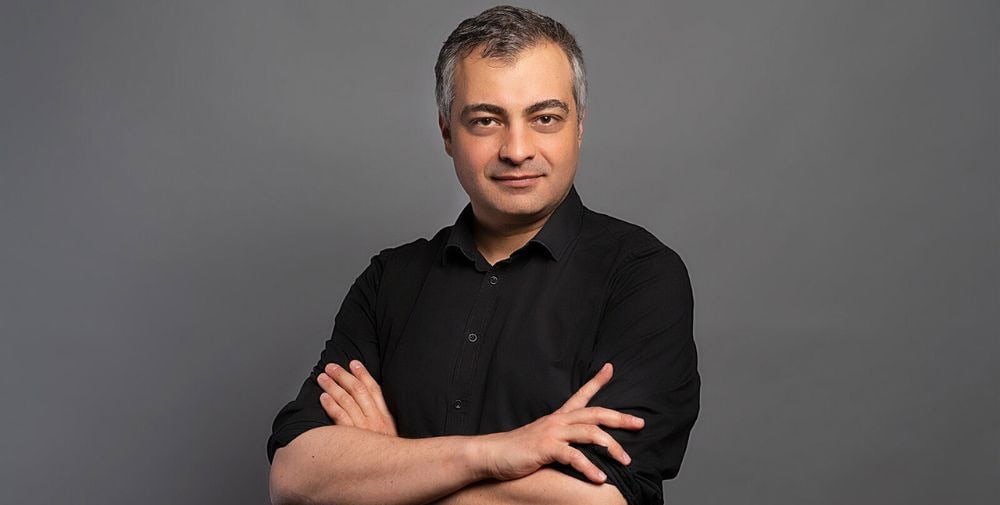
Prof. Dr. Marco Ragni, holder of the Chair of Predictive Behavior Analysis at Chemnitz University of Technology, and Prof. Dr. Ute Schmid, Professor of Cognitive Systems at the Otto-Friedrich-University Bamberg, have now published the textbook “Cognitive Artificial Intelligence”, which introduces this field of research and presents central principles, methods and objectives. The book conveys the formal foundations of knowledge representation and reasoning, then introduces the modeling of thought and problem-solving processes (including search, heuristics, learning methods, neural networks) and shows applications in areas such as learning, expertise, language processing and text comprehension. The presentation is deliberately kept simple and is aimed at students, teachers and anyone who wants to model cognitive processes and better understand the cognitive foundations of AI systems.
Bibliographic information: Marco Ragni, Ute Schmid. Cognitive Artificial Intelligence. Springer. 2025. 346 pages. ISBN 3662694972.
About: Prof. Dr. Marco Ragni
Marco Ragni is Professor of Predictive Behavior Analysis at Chemnitz University of Technology and Scientific Director of the Center for Humans and Technology (MeTech). He holds a doctorate in computer science and cognitive science from the University of Freiburg and conducts research at the interface of cognitive psychology and AI. His work focuses on predictive and explainable models of cognitive processes – central topics of the textbook “Cognitive Artificial Intelligence”.
Homepage of the Center for Humans and Technology: https://www.tu-chemnitz.de/metech
For further information, please contact Prof. Dr. Marco Ragni, phone 0371 531-38284, e-mail marco.ragni@metech.tu-chemnitz.de.
– – – – – –
Further links
👉 www.tu-chemnitz.de
Photo: Phillip Hiersemann