CHASSIS brings together leading companies from Europe’s mobility, semiconductor and software industries with renowned research institutions to drive the development, standardization and industrialization of chiplet technology for software-defined mobility. The three-year international research program brings together the expertise and innovative strength of 18 members, including major European OEMs (BMW Group, Renault/Ampere, Stellantis), automotive suppliers (Valeo), semiconductor companies (Arteris, Axelera AI, Bosch, Infineon, Menta, NXP, Tenstorrent), EDA technology providers (Siemens), software providers (TTTech-Auto) and research institutes (CEA, CHIPS-IT, imec and two Fraunhofer Institutes as key players in the Research Fab Microelectronics Germany (FMD) and the European APECS pilot line). Under the project coordination of Bosch, CHASSIS partners from six countries have set themselves the goal of jointly establishing an open, cross-border chiplet ecosystem.
Chiplets: a modular solution for flexible and scalable computing power
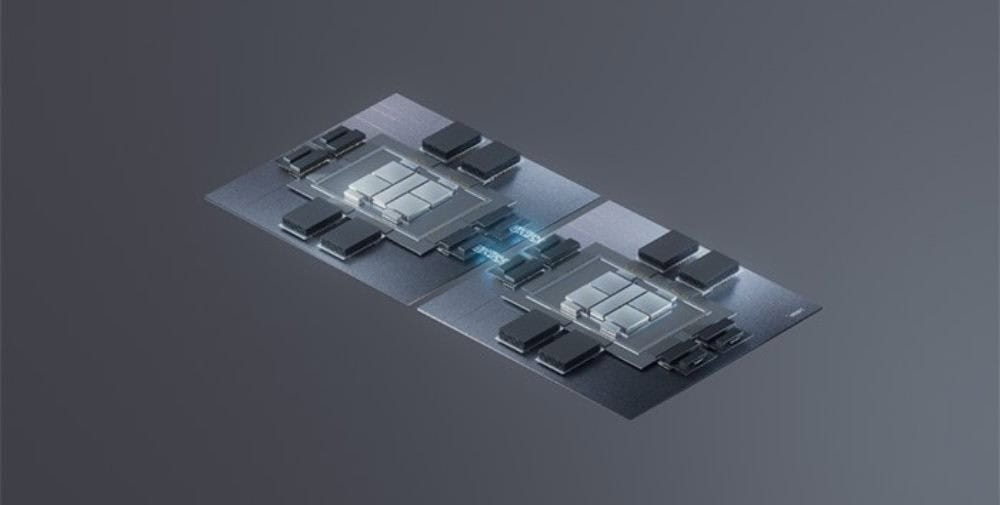
With increasing software content in vehicles, the requirements for computing power and flexibility are growing. Conventional monolithic SoC concepts are reaching their technical limits, as combining many functions on a single chip makes their development more complex and costly. One solution to this challenge is chiplets – a modular alternative to single-chip approaches. Chiplets distribute computing tasks across several smaller, specialized chips that can be combined as required. This modular design makes it possible to design vehicle electronics according to functional requirements instead of being constrained by hardware limitations. Chiplet technology can overcome the limitations of traditional monolithic SoCs, opening up new ways of developing, integrating and delivering automotive electronics.
CHASSIS: a pan-European initiative
CHASSIS is the first European initiative for the development of an open automotive chiplet platform. “The CHASSIS project brings together exceptional expertise from industry and research. All partners share the vision of a modular, safe and resilient future for automotive semiconductors. Our joint work will not only enable technological advances, but also help to strengthen Europe’s leadership in software-defined mobility and semiconductor technology,” explains Thomas Schamm, Bosch spokesperson for CHASSIS. The project is supported by the Chips Joint Undertaking and its members, including additional funding from France, Germany, the Netherlands and the United Kingdom.
Chiplet platform for the next generation of vehicle applications
The full potential of chiplet technology can only be unlocked with standardized interfaces and chiplet architectures. This is precisely where a joint approach such as CHASSIS comes in: The initiative plans to develop an open chiplet-based platform specifically for use in vehicles. This should be flexible, scalable and expandable in order to meet the requirements of future vehicle generations. This will open up the market to other providers, which will strengthen the competition for high-performance computing in terms of both technology and price. “The goals of CHASSIS can only be achieved through the joint commitment of all partners. In the long term, the entire automotive industry worldwide will benefit from an open chiplet ecosystem,” says Thomas Schamm.
About CHASSIS
CHASSIS stands for “Chiplet-based Hardware Architectures for Software-Defined Vehicles”. The European research project will run for three years and focuses on chiplet technology for automotive applications. A total of 18 leading companies from the automotive, semiconductor, software and research sectors are involved: Arteris, Axelera AI, BMW Group, CEA, CHIPS-IT, Fraunhofer, imec, Infineon, Menta, NXP, Renault/Ampere, Stellantis-CRF, Siemens, Tenstorrent, TTTech-Auto, Valeo and Bosch as project coordinator. The project aims to build an open chiplet ecosystem that supports the development, standardization and industrialization of secure and scalable chiplet technology for software-defined mobility. The project is supported by the Chips Joint Undertaking and its members, including additional funding from France, Germany, the Netherlands and the UK.
– – – – – –
Further links
👉 www.eas.iis.fraunhofer.de
Photo: imec